Samsung’s 2026 Galaxy Z series is not simply a routine refresh. It separates foldables into three lifestyle categories: Ultra productivity, everyday immersion and compact self-expression. For buyers, the biggest decision is not only price or specifications, but the kind of foldable experience they actually want. If the phone is expected to replace a small tablet, act as a travel workstation and deliver the most capable camera system in the range, the Galaxy Z Fold8 Ultra is the flagship choice. If the priority is a lighter Fold with a new shape optimised for content, browsing and casual multitasking, the Galaxy Z Fold8 is likely the better everyday fit. If portability, quick replies, camera creativity and style matter more than a tablet-sized screen, the Galaxy Z Flip8 stands apart.
Quick Comparison Table
| Technical specification | Galaxy Z Fold8 Ultra | Galaxy Z Fold8 | Galaxy Z Flip8 |
| Device category | Premium book-style foldable; successor to the traditional Galaxy Z Fold line | New wider book-style foldable focused on a shorter, broader screen shape | Clamshell foldable focused on portability and cover-screen use |
| Main display | 8.0-inch Dynamic AMOLED 2X foldable display; 2504 x 2256 QXGA+; up to 120 Hz adaptive refresh rate | 7.6-inch Dynamic AMOLED 2X foldable display; 1848 x 2448; up to 120 Hz adaptive refresh rate | 6.9-inch Dynamic AMOLED 2X foldable display; 2520 x 1080 FHD+; up to 120 Hz adaptive refresh rate |
| Cover / sub display | 6.5-inch Dynamic AMOLED 2X; 2520 x 1080 FHD+; up to 120 Hz | 5.5-inch Dynamic AMOLED; 1972 x 1248; up to 120 Hz | 4.1-inch Super AMOLED FlexWindow; 1048 x 948; 60 Hz / 120 Hz |
| Display features | Vision Booster; LTPO-style adaptive refresh behaviour; large multitasking canvas | Vision Booster; 4:3-style internal layout for reading, browsing and documents | FlexWindow for glanceable apps, shortcuts, camera preview and quick AI interactions |
| Processor | Snapdragon 8 Elite Gen 5 for Galaxy; octa-core CPU | Snapdragon 8 Elite Gen 5 for Galaxy; octa-core CPU | Exynos 2600; octa-core CPU |
| Memory | 12 GB RAM on 256 GB and 512 GB models; 16 GB RAM on 1 TB model | 12 GB RAM on 256 GB and 512 GB models; 16 GB RAM on 1 TB model | 12 GB RAM |
| Storage options | 256 GB, 512 GB or 1 TB; non-expandable | 256 GB, 512 GB or 1 TB; non-expandable | 256 GB or 512 GB; non-expandable |
| Rear cameras | Triple camera: 200 MP wide main, 50 MP ultrawide, 10 MP telephoto | Dual camera: 50 MP wide main, 50 MP ultrawide | Dual camera: 50 MP wide main, 12 MP ultrawide |
| Rear camera aperture / stabilisation | Main f/1.7 with OIS; ultrawide f/1.9; telephoto f/2.4 with OIS | Main f/1.8; ultrawide f/1.9; OIS support on main camera | Main f/1.8 with Dual Pixel AF; ultrawide f/2.2 |
| Zoom | 3x optical zoom; 2x optical-quality zoom via Adaptive Pixel sensor; digital zoom up to 30x | No dedicated telephoto lens; digital zoom dependent on software processing | No dedicated telephoto lens; digital zoom dependent on software processing |
| Front / cover cameras | 10 MP front camera plus 10 MP cover camera | 10 MP front camera plus 10 MP cover camera | 10 MP internal selfie camera; rear cameras can be used with FlexWindow preview |
| Video recording | Up to 8K UHD at 30 fps; slow motion up to 240 fps at FHD and 120 fps at UHD/FHD | Up to 8K-class video support reported for the Fold line; practical capability depends on camera mode | High-resolution mobile video with FlexCam-style hands-free shooting |
| Battery capacity | 5,000 mAh dual-cell battery | 4,800 mAh battery | 4,300 mAh battery |
| Wired charging | 45 W wired charging | 45 W wired charging | 25 W wired charging |
| Wireless charging | 20 W fast wireless charging plus Wireless PowerShare | Wireless charging plus reverse wireless charging support | 15 W wireless charging plus reverse wireless charging support |
| Dimensions folded | 158.4 x 72.8 x 8.9 mm | 123.9 x 81.9 x 9.7 mm | 75.4 x 85.7 x 13.1 mm |
| Dimensions unfolded | 158.4 x 143.2 x 4.1 mm | 123.9 x 161.4 x 4.5 mm | 75.4 x 166.9 x 6.1 mm |
| Weight | 215 g | 201 g | About 180 g |
| Durability rating | IP48 dust and water resistance; Armour Aluminium frame; Gorilla Glass protection on cover/rear panels | IP48 dust and water resistance; Aluminium frame; Gorilla Glass protection on cover/rear panels | IP48 splash/dust resistance rating reported for the 2026 Flip line |
| Connectivity | 5G Sub6, LTE, Wi-Fi 7, Bluetooth 6.0, NFC, UWB, USB-C with USB 3.2 Gen 1 | 5G, LTE, Wi-Fi 7, Bluetooth, NFC, USB-C | 5G, LTE, Wi-Fi 7, Bluetooth 5.4, NFC, USB-C |
| SIM support | Nano-SIM and eSIM | Nano-SIM and eSIM | Nano-SIM and eSIM |
| Biometrics | Side-mounted fingerprint scanner | Side-mounted fingerprint scanner | Side-mounted fingerprint scanner |
| Speakers | Stereo speakers | Stereo speakers | Stereo speakers |
| Software | Android 17 with One UI 9 and Galaxy AI | Android 17 with One UI 9 and Galaxy AI | Android 17 with One UI 9 and Galaxy AI |
| Colours | Violet Shadow, Graphite, Cream and Green Shadow online exclusive | Graphite, Cream, Lavender and Pistachio online exclusive | Graphite, Cream, Pink and Mint online exclusive |
| Best technical advantage | Largest display, strongest camera system, biggest battery and broadest connectivity set | Lighter Fold body, wider cover display and balanced Fold productivity at a lower tier than Ultra | Most compact design, largest cover-screen lifestyle utility and lowest weight in the family |
Key similarities
- All three are premium foldables: Each model is built around Samsung’s foldable design language, with a flexible main display, a compact folded form and software features tuned for foldable use.
- Galaxy AI is central across the range: The Fold8 Ultra, Fold8 and Flip8 all use Galaxy AI, but they apply it differently depending on screen size and form factor.
- High-refresh displays are standard: Each model uses a premium AMOLED display experience with smooth refresh rates for scrolling, gaming and everyday navigation.
- 5G and modern connectivity are included: All three support 5G, Wi-Fi 7-class connectivity, NFC and USB-C, making them flagship-level devices for wireless and wired use.
- No expandable storage: Storage must be chosen at purchase, because all three models rely on internal storage rather than microSD expansion.
- Side-mounted fingerprint security: Each model uses a side fingerprint scanner, which suits foldable designs better than an under-display scanner.
- Designed for camera flexibility: All three support more creative shooting positions than a standard slab phone, especially when folded or partially folded.
Key differences
- Form factor: The Fold8 Ultra and Fold8 are book-style foldables that open into tablet-like screens, while the Flip8 is a clamshell foldable designed to fold down into a smaller, more pocketable shape.
- Display size and purpose: The Fold8 Ultra has the largest internal display and is best for productivity; the Fold8 balances a large screen with lighter handling; the Flip8 prioritises its FlexWindow and compact internal-to-cover-screen workflow.
- Performance platform: The Fold8 Ultra and Fold8 use the Snapdragon 8 Elite Gen 5 for Galaxy, while the Flip8 uses an Exynos 2600 platform in the current comparison table.
- Camera hierarchy: The Fold8 Ultra is the clear camera leader with a 200 MP main camera and telephoto lens; the Fold8 keeps a simpler dual-camera setup; the Flip8 focuses more on convenient hands-free capture than maximum camera hardware.
- Battery and charging: The Fold8 Ultra has the largest battery and fastest overall charging profile, the Fold8 sits close behind, and the Flip8 has the smallest battery with slower wired charging.
- Portability: The Flip8 is the easiest to carry, the Fold8 is the lightest book-style Fold, and the Fold8 Ultra is the biggest and heaviest option.
- Best use case: Fold8 Ultra is strongest for power users and creators, Fold8 is best for everyday foldable multitasking, and Flip8 is best for style, portability and quick interactions.
Design and Portability
Design is the clearest dividing line. The Fold8 Ultra is the premium large-screen foldable for people who are comfortable carrying a bigger device in exchange for more screen, more camera hardware and more productivity potential. The Fold8 is the more balanced book-style foldable: still expansive when opened, but lighter and more approachable. The Flip8 is the portability champion, because its clamshell shape changes how the phone fits into pockets, bags and everyday routines.
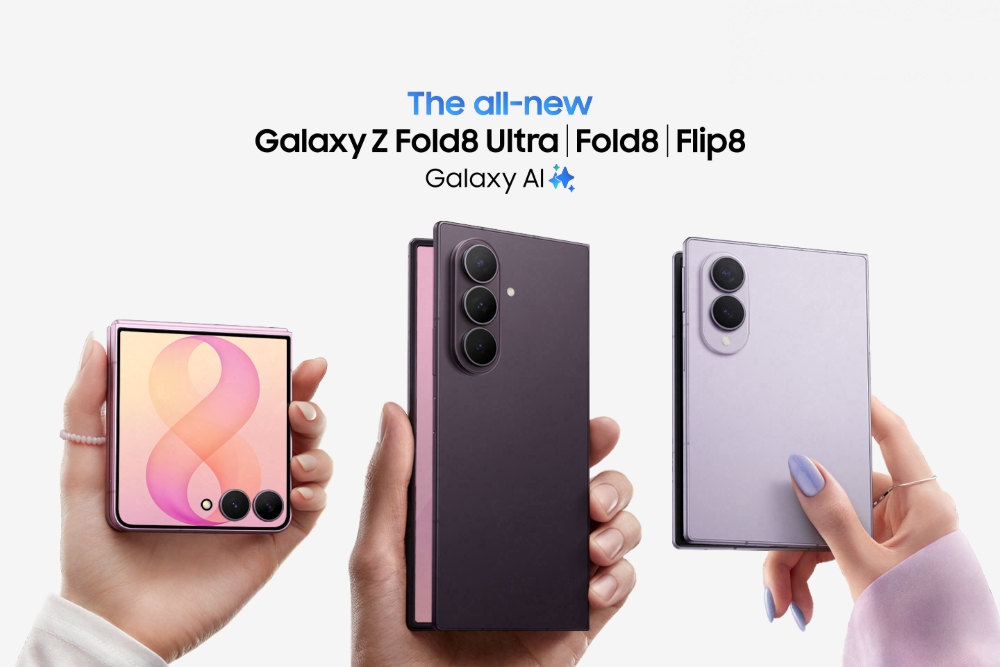
If you often use a phone one-handed, the Flip8 will likely feel most natural when closed and quickest for simple tasks. If you want one device for both phone and tablet-style use, choose between the two Fold models. The Fold8 Ultra gives you the biggest canvas; the Fold8 gives you the more manageable Fold experience.
Productivity, AI and Multitasking
Samsung’s announcement emphasises Galaxy AI across all three models, but the value of AI changes depending on the shape of the device. On the Fold8 Ultra and Fold8, AI benefits from more screen space: summaries, translations, search, app suggestions and multitasking tools can sit beside the content they are helping with. That makes the Fold models better for people who want AI to support work, study, research and planning.
The Fold8 Ultra should be the strongest productivity device because it combines the biggest display with the most premium hardware positioning. It is the better option for running multiple apps, reviewing dense information or using the phone as a portable command centre. The Fold8 remains very capable, but its appeal is more about making multitasking and immersive content feel comfortable rather than maximising every specification.
The Flip8’s AI story is different. It is less about a big workspace and more about reducing effort. The AI-native FlexWindow is designed for quick, relevant information and shortcuts, making the Flip8 suitable for users who want to act quickly without opening the phone fully.
Cameras and Content Creation
For camera-first buyers, the Fold8 Ultra is the most compelling model. Its reported 200 MP main camera, 50 MP ultrawide camera and telephoto option make it the strongest all-round camera device in the series. That matters for creators, travellers and professionals who want a foldable but still expect a flagship-grade camera setup.
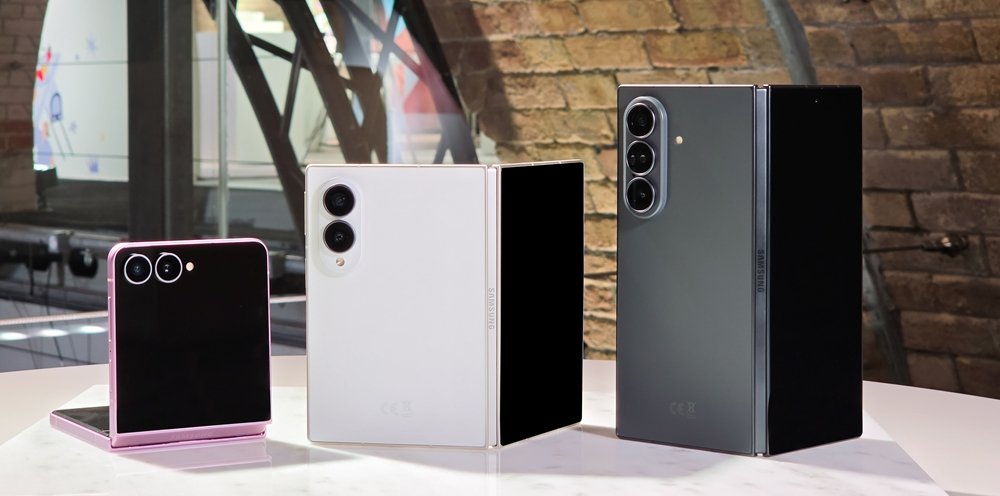
The Fold8 should still suit everyday photography, especially for users who value the ability to review, edit and share content on a larger inner display. Its appeal is less about raw camera hierarchy and more about the total experience: shoot on the phone, unfold it, and immediately view or refine the result on a bigger screen.
The Flip8 is the most playful content device. Its shape supports hands-free shots, flexible angles and social-first capture. It may not be the technical camera leader, but its design encourages spontaneous creation in ways a conventional slab phone does not.
Which Model Should You Buy?
- Choose Galaxy Z Fold8 Ultra if you want the largest screen, the strongest camera setup, the most premium Fold experience and a phone that can double as a productivity device.
- Choose Galaxy Z Fold8 if you want a lighter, more approachable book-style foldable for reading, browsing, watching, gaming and everyday multitasking.
- Choose Galaxy Z Flip8 if you want the most compact and expressive foldable, with quick cover-screen interactions and a design that prioritises portability.
The best device is not the same for every buyer. The Galaxy Z Fold8 Ultra is the flagship for people who want a foldable to do serious work and creative tasks. The Galaxy Z Fold8 is the sweet spot for users who want the Fold experience without committing to the largest and most expensive model. The Galaxy Z Flip8 is the lifestyle choice: smaller, more expressive and more convenient for quick everyday moments. Samsung’s 2026 foldable line-up works because the three models are not competing for exactly the same person. They are three answers to one question: how should a phone fit into your life when it no longer has to be a single flat rectangle?