From harbour ferries and city trams to scenic regional trains, Australia is surprisingly easy to explore without hiring a car—if you know which networks work best for visitors.
Why Australia’s Public Transport Works for Travellers
Public transport in Australia is:
- Safe and tourist‑friendly
- Integrated across trains, trams, buses, ferries, and regional networks
- Affordable, with daily caps in many cities
- Easy to navigate, with clear journey planners and straightforward ticketing—although payment methods vary by city
In the major capitals, public transport reaches the places most visitors want to see: waterfront precincts, museums, markets, beaches and dining neighbourhoods. The experience changes outside the cities, where timetables may be less frequent and organised tours, coaches or rideshare can become the practical choice.
Sydney: Trains, Ferries and Harbour Views
Sydney offers one of the most comprehensive public transport systems in the country.
Best modes for tourists
- Trains – connect the CBD to Bondi Junction, Blue Mountains, airport, and suburbs
- Light Rail – perfect for Darling Harbour, Chinatown, and The Star
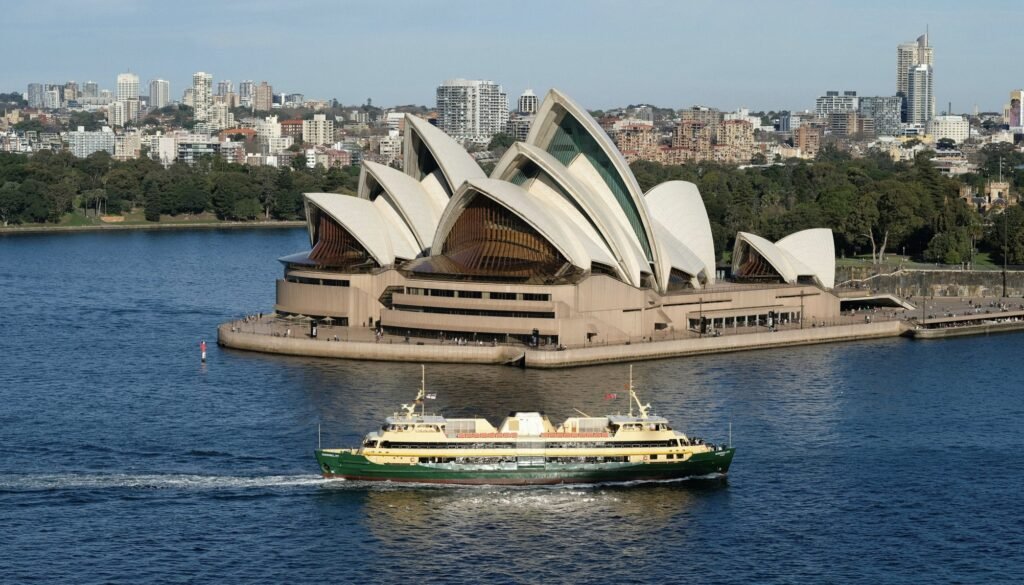
- Ferries – iconic rides to Manly, Taronga Zoo, and Circular Quay
- Buses – frequent services to Bondi Beach and coastal suburbs
Top tourist areas with great transport
- Circular Quay & The Rocks
- Bondi Beach
- Manly
- Darling Harbour
- Blue Mountains (via train to Katoomba)
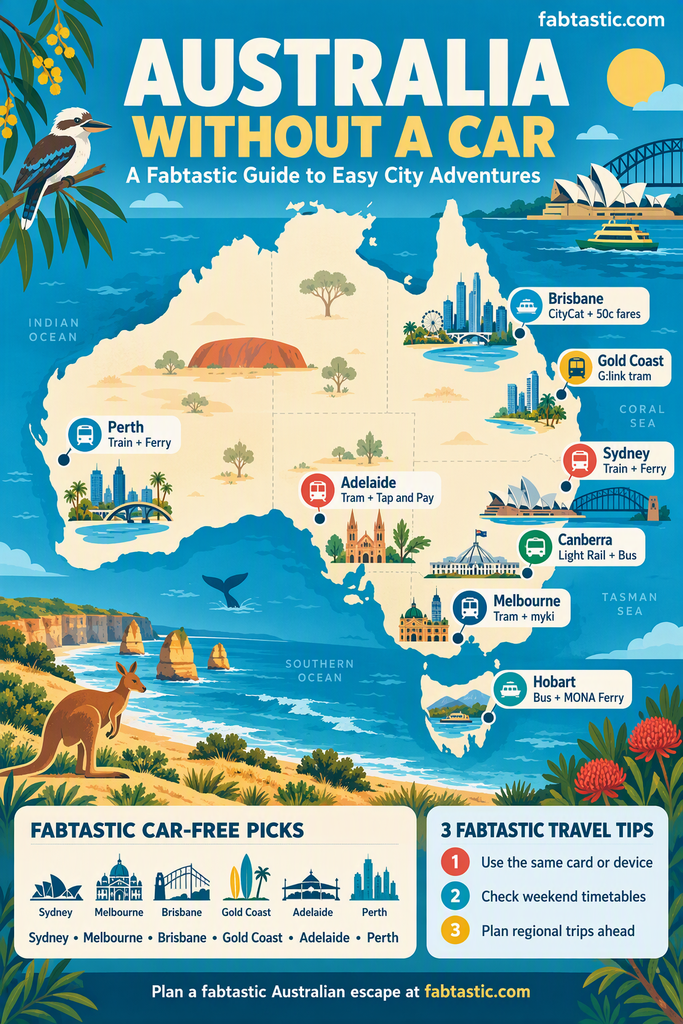
Payment: Tap‑on/tap‑off with credit card or Opal card.
Melbourne: The Tram-Lover’s City
Melbourne is famous for its extensive tram network, the largest in the world.
Best modes for tourists
- Trams – especially the Free Tram Zone in the CBD
- Trains – connect the city centre with neighbourhoods such as Brighton and Footscray
- Buses – fill gaps where trams don’t reach
Top tourist areas with great transport
- Federation Square & Flinders Street
- St Kilda Beach
- Queen Victoria Market
- Fitzroy & Collingwood
- Brighton Beach (train)
- Great Ocean Road (coach services from Southern Cross)
Payment: Use a myki card or Mobile myki on a compatible Android device. Travel within the CBD’s Free Tram Zone does not require a touch on; once you leave the zone, touch on with myki. Bank-card tapping is not yet the standard option across the network.
Brisbane: River Travel Made Easy
Brisbane’s transport is clean, modern, and easy to use.
Best modes for tourists
- CityCat ferries – scenic rides along the Brisbane River
- Trains – airport link, Gold Coast connection
- Buses – frequent services across the city
Top tourist areas with great transport
- South Bank
- Fortitude Valley
- Lone Pine Koala Sanctuary (bus)
- Gold Coast (train + tram once you arrive)
Payment: Contactless Visa or Mastercard, a supported digital wallet, go card or paper ticket. Public transport journeys across South East Queensland currently cost 50 cents, with normal transfer rules applying.
Gold Coast: Beach Hopping by Tram
The Gold Coast is extremely tourist‑friendly with reliable public transport.
Best modes for tourists
- G:link tram – connects Surfers Paradise, Broadbeach, Southport
- Buses – reach theme parks like Movie World and Dreamworld
- Train – connects to Brisbane
Top tourist areas
- Surfers Paradise
- Broadbeach
- Burleigh Heads
- Theme parks (via bus)
Payment: Use the same South East Queensland options as Brisbane: contactless Visa or Mastercard, a supported digital wallet, go card or paper ticket.
Sunshine Coast: Best with a Little Planning
Public transport is available but more limited compared to Brisbane or Gold Coast.
Best modes
- Buses – connect beaches and towns
- Train – to Brisbane (stations inland)
Top tourist areas
- Noosa
- Mooloolaba
- Caloundra
Tip: Great for beach hopping, but some hinterland areas may require tours or rideshare.
Cairns: Compact, Walkable and Reef-Ready
Cairns is compact and easy to navigate.
Best modes
- Buses – local routes to beaches and attractions
- Walking – CBD and Esplanade are pedestrian‑friendly
Top tourist areas
- Cairns Esplanade
- Palm Cove (bus)
- Kuranda (train via Kuranda Scenic Railway)
Note: Reef tours depart from the marina—walkable from most hotels.
Adelaide: Trams, Beaches and Easy City Travel
Adelaide’s transport is simple and efficient.
Best modes
- Trams – CBD to Glenelg Beach
- Trains – reach Port Adelaide and outer suburbs
- Buses – widespread coverage
Top tourist areas
- Glenelg Beach
- Adelaide Oval
- Hahndorf (bus + short walk)
- Barossa Valley (coach tours)
Payment: Tap and Pay with a bank card or digital wallet, use the Buy & Go app, or travel with a metroCARD. These options are accepted across Adelaide Metro buses, trains and trams.
Perth: Coastal Adventures by Train and Ferry
Perth offers excellent public transport for coastal and city attractions.
Best modes
- Trains – Fremantle, Mandurah, Joondalup
- Buses – city and suburbs
- Ferries – to South Perth (Zoo)
Top tourist areas
- Fremantle
- Cottesloe Beach
- Kings Park
- Rottnest Island (ferry from Fremantle or Perth)
Payment: Tap on and off with a contactless Visa or Mastercard, use a digital wallet, buy a cash ticket, or use a SmartRider. Contactless travel is charged at the standard cash fare, while SmartRider can be better value.
Hobart: Simple City Buses and a Standout Ferry
Hobart’s public transport is more limited but still workable for key attractions.
Best modes
- Buses – city and suburbs
- Ferries – Mona Ferry (must‑do experience)
Top tourist areas
- Salamanca Place
- MONA
- Mount Wellington (tour buses)
Canberra: Museums, Monuments and Light Rail
Australia’s capital has modern transport options.
Best modes
- Light Rail – connects Gungahlin to the CBD
- Buses – reach museums and galleries
Top tourist areas
- Parliament House
- National Gallery
- Australian War Memorial
- Lake Burley Griffin
Easy Regional Escapes by Train or Coach
These regions are accessible via trains or coaches:
- Blue Mountains (NSW) – train from Sydney
- Hunter Valley (NSW) – train + local buses
- Great Ocean Road (VIC) – coach tours
- Phillip Island (VIC) – coach + local buses
- Snowy Mountains (NSW) – coach services
- Tasmanian East Coast – regional buses
Smart Tips Before You Tap On
- Use the same card or device to tap on and off; a physical card and its digital-wallet version may be treated as different payment methods.
- Check the city’s official journey planner before you leave, especially at night, on Sundays and during major events.
- Know the local rule: some networks require both a tap on and tap off, while Adelaide generally requires validation only when boarding or transferring.
- Keep a backup payment option in case an overseas card is declined or attracts foreign transaction fees.
- Allow extra time for regional trips, where services may be infrequent and reservations may be required.
- Use ferries as transport and sightseeing in Sydney, Brisbane, Perth and Hobart.
The Bottom Line
Australia is not uniformly easy to explore without a car, but its biggest cities and several headline destinations are. Build your itinerary around strong transport corridors, leave room for slower regional connections, and treat the journey as part of the experience.
A ferry across Sydney Harbour, a tram through central Melbourne or a train to Fremantle can be every bit as memorable as the attraction at the other end.