Tasmania brings together World Heritage wilderness, alpine lakes, long beaches, historic towns, distinctive wildlife and one of Australia’s strongest regional food scenes. Hobart and Launceston are natural gateways, while the Tasman Peninsula, Freycinet, Cradle Mountain, the west coast and the north-west each reward several nights. Seven days gives a useful introduction; allow 10 to 14 days for a less hurried circuit.
Quick Trip Planner
| Question | Practical answer |
| Ideal trip length | Seven days for major highlights; 10 to 14 days for a more relaxed circuit with the east and west coasts. |
| Best gateways | Hobart and Launceston by air; Devonport for travellers arriving by ferry with a vehicle. |
| Best overnight bases | Hobart, Port Arthur, Coles Bay or Bicheno, Launceston, Cradle Mountain and Strahan. |
| Best general seasons | Summer for long daylight and hiking; autumn for produce and colour; winter for quiet, snow and cosy stays; spring for wildflowers and changeable weather. |
| Do I need a car? | Not for a Hobart or Launceston city break, but a car is the most practical option for a statewide itinerary. |
Suggested Seven Day Itinerary
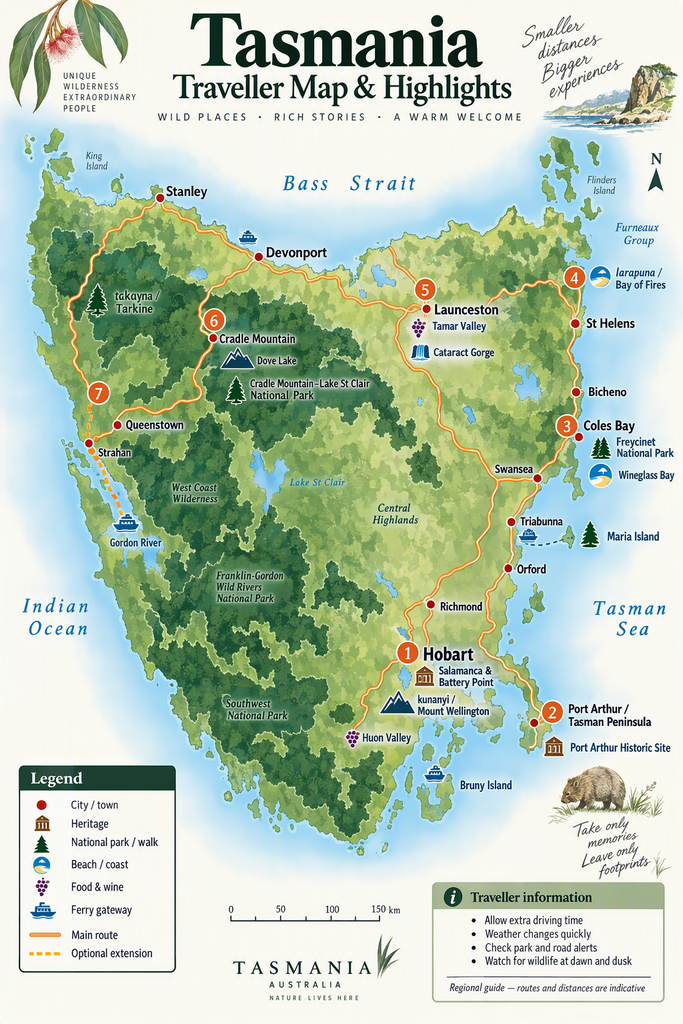
Day 1: Hobart
- Waterfront and Salamanca: Explore the historic docks, Salamanca Place and Battery Point.
- Art or history: Choose a museum, gallery or heritage experience that suits your interests.
- kunanyi / Mount Wellington: Visit only if weather, road access and visibility are suitable.
- Evening: Dine around the waterfront, city centre or North Hobart.
Day 2: Tasman Peninsula
- Richmond: Pause in the historic village on the journey east.
- Tasman Peninsula: Stop at coastal lookouts and geological features where access allows.
- Port Arthur: Allow several hours for the historic site.
- Overnight: Stay near Port Arthur or return to Hobart if you prefer fewer hotel changes.
Day 3: East Coast and Freycinet
- Orford and Triabunna: Follow the coast north and pause for bay views.
- Swansea: Stop for lunch and views across Great Oyster Bay.
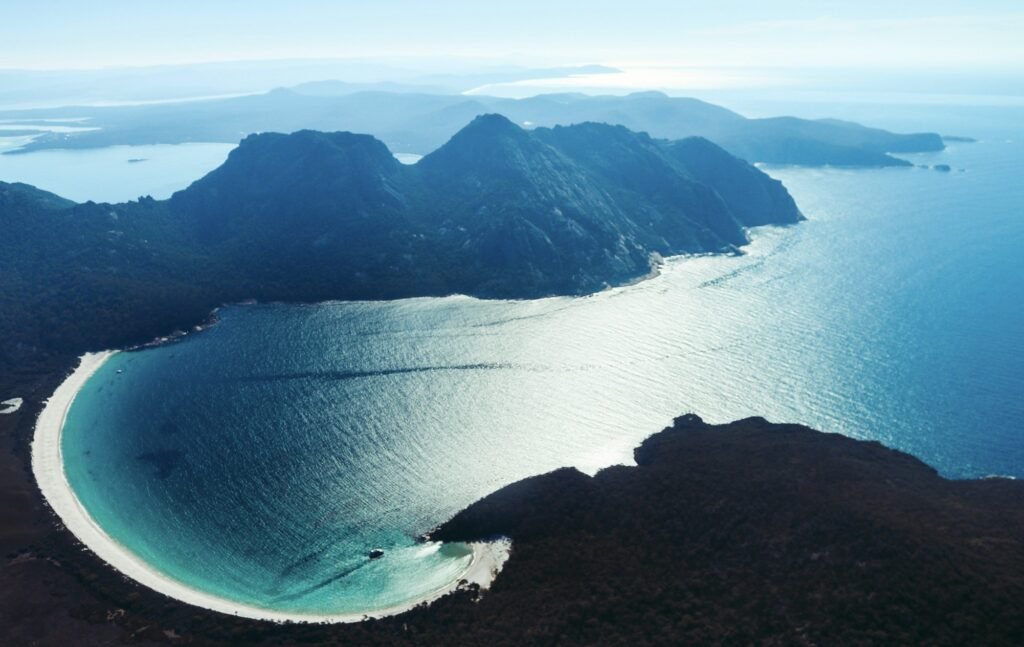
- Freycinet: Choose a short coastal walk or lookout suited to your ability and the conditions.
- Overnight: Stay in Coles Bay or Bicheno.
Day 4: Bay of Fires and Launceston
- Bicheno: Begin with a beach walk or local wildlife experience.
- St Helens and larapuna / Bay of Fires: Explore selected beaches and headlands without trying to cover the entire coast.
- Launceston: Travel inland for dinner and an overnight stay.
Day 5: Launceston and the Tamar Valley
- Cataract Gorge: Walk the accessible sections that match the weather and your fitness.
- City centre: Explore parks, architecture, galleries and local produce.
- Tamar Valley: Add cellar doors or farm experiences with confirmed opening times and a designated driver.
Day 6: Cradle Mountain
- Travel west: Allow extra time for winding roads and scenic stops.
- Cradle Mountain: Use the visitor transport arrangements in place and choose a walk around Dove Lake or nearby forest.
- Overnight: Stay near the national park for an early start and changing mountain conditions.
Day 7: North-west Coast or Central Return
- North-west option: Continue to Sheffield, Devonport, Stanley or the food-producing districts of the north-west.
- Return option: Travel toward Launceston or Hobart, allowing generous time for weather and road conditions.
- Extend west: With two or three extra nights, add Queenstown, Strahan and a Gordon River experience.
Where to Stay
- Hobart: Best for waterfront dining, museums, markets and day trips to the south-east.
- Port Arthur and the Tasman Peninsula: Useful for early or late visits to the historic site, coastal walks and cruises.
- Coles Bay or Bicheno: Best for Freycinet, east-coast beaches and wildlife experiences.
- Launceston: A convenient northern base for Cataract Gorge, the Tamar Valley and day trips.
- Cradle Mountain: Ideal for walking and wildlife, with limited inventory and strong demand.
- Strahan: Best for west-coast history, harbour cruises and access to wild landscapes.
- Devonport or the north-west: Practical for ferry travellers, farm produce, coastal towns and Stanley.
Booking tip: Reserve early for summer, school holidays, festivals and remote national-park areas. Compare regions and current trip ideas through Discover Tasmania.
Where to Eat and Drink
- Hobart: Look for seafood, modern Australian dining, bakeries, distilleries and produce-driven menus around the waterfront and inner suburbs.
- Huon and Coal River valleys: Explore orchards, cider, wine, farm gates and seasonal produce.
- East coast: Try oysters, seafood, berries, cool-climate wine and casual coastal dining.
- Launceston and the Tamar Valley: Find restaurants, markets, vineyards and farm experiences across the city and valley.
- North-west: Look for cheese, chocolate, berries, vegetables, seafood and paddock-to-plate venues.
- West coast: Expect fewer options outside larger towns; book dinner and check opening days before arrival.
Popular restaurants, cellar doors and special food experiences can fill well ahead. Confirm opening days, transport and tasting arrangements, particularly outside peak season.
Attractions and Experiences
| Area | Highlights |
| Hobart and the south | Salamanca, Battery Point, waterfront, kunanyi / Mount Wellington, Bruny Island and the Huon Valley. |
| Tasman Peninsula | Port Arthur Historic Site, sea cliffs, coastal formations, walks and boat trips. |
| East coast | Freycinet, Wineglass Bay, Bicheno, Maria Island, St Helens and larapuna / Bay of Fires. |
| Launceston and north | Cataract Gorge, heritage streets, Tamar Valley food and wine, and northern villages. |
| Cradle Mountain and central Tasmania | Dove Lake, alpine scenery, wildlife, short walks, Sheffield and historic highland towns. |
| West and north-west | Strahan, Gordon River, Queenstown, takayna / Tarkine, Stanley and productive coastal farmland. |
Important Tips for Travellers
- Allow more driving time: Distances can look short, but roads are often winding, steep and slower than mainland highways.
- Check parks and emergencies: Review Tasmania Parks and Wildlife Service alerts and TasALERT before remote travel.
- Check roadworks and closures: Use Service Tasmania road information, particularly after storms, snow or bushfires.
- Prepare for changeable weather: Carry warm, waterproof layers even in summer, and do not rely on a clear forecast at sea level for alpine areas.
- Travel safely around wildlife: Slow down at dawn, dusk and after dark, when animals are often near roads.
- Plan fuel and food: Top up before remote legs and verify opening hours in small towns and on the west coast.
- Arrange park access: A parks pass may be required, and some popular areas use shuttle or booking systems.
- Respect Aboriginal Country: Follow local guidance, stay on marked routes and leave natural and cultural places undisturbed.
- Check ferry requirements: If sailing with a vehicle, confirm check-in, vehicle dimensions and biosecurity rules through Spirit of Tasmania.
Frequently Asked Questions
Can I see Tasmania in one week?
Yes, but choose a focused route. Hobart, the Tasman Peninsula, Freycinet, Launceston and Cradle Mountain make a strong first trip. Add the west or far north-west only with extra time.
Should I fly into Hobart or Launceston?
Either works. Open-jaw flights—arriving in one city and departing from the other—can reduce backtracking. Compare fares, vehicle-hire conditions and your preferred route.
Is Tasmania suitable without a car?
Hobart and Launceston work well for short city stays, and organised tours reach many major attractions. Independent regional travel is much easier with a vehicle.
Do I need a four-wheel-drive vehicle?
No for the standard touring circuit and major attractions. A conventional vehicle is suitable for most sealed routes; avoid unsealed roads if prohibited by your rental agreement or unsuitable in current conditions.
When is the best time to visit?
There is no single best season. Summer offers long daylight and peak demand; autumn is excellent for touring and produce; winter brings quiet stays and possible snow; spring offers fresh landscapes with highly variable weather.
How many nights should I spend at Cradle Mountain?
Two nights provide a useful buffer for weather and allow more than one walk. One night can work, but arrival and departure driving reduce time in the park.
Where can I find current visitor information?
Start with Discover Tasmania and its official itineraries, then confirm park alerts, transport, opening hours and bookings with individual operators.