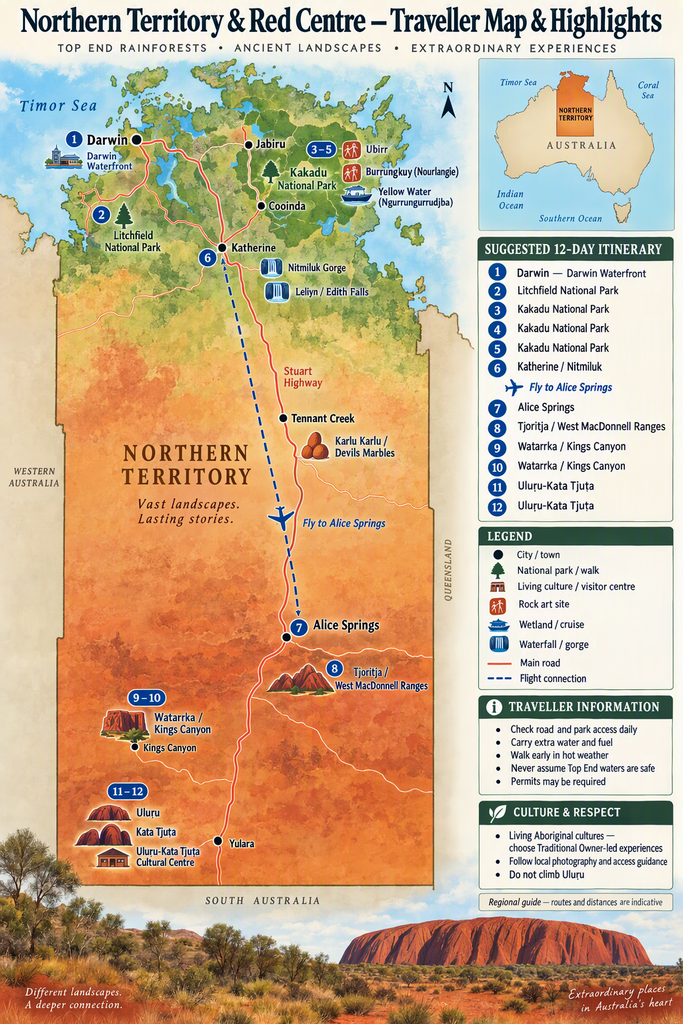
Australia’s Northern Territory stretches from the tropical wetlands and escarpments of the Top End to the desert ranges and sacred living landscapes of the Red Centre. Darwin, Kakadu, Nitmiluk, Alice Springs, Tjoritja / West MacDonnell Ranges, Watarrka / Kings Canyon and Uluṟu-Kata Tjuṯa offer very different journeys.
Living Aboriginal cultures are central to the Territory: seek Traditional Owner-led experiences, listen to local guidance and approach Country with respect. Allow at least a week for either the Top End or Red Centre, or around two weeks to combine both by air.
Quick Trip Planner
| Question | Practical answer |
| Ideal trip length | Six to eight days for the Red Centre; five to seven days for Darwin, Kakadu and Katherine; about two weeks to combine both regions. |
| Best gateways | Darwin for the Top End; Alice Springs or Yulara for the Red Centre. |
| Best overnight bases | Darwin, Jabiru or Cooinda, Katherine, Alice Springs, Kings Canyon and Yulara. |
| Best general seasons | May to September usually brings cooler Red Centre conditions and the Top End dry season. Tropical summer offers dramatic weather and fewer visitors but restricts access. |
| Do I need a car? | A car or organised tour is essential outside the main centres. Match the vehicle to road conditions, access rules and rental restrictions. |
Suggested Twelve Day Itinerary
Days 1–2: Darwin and Litchfield
- Darwin: Explore the waterfront, museums, markets and harbour, and learn about the city’s Aboriginal, wartime and multicultural histories.
- Cultural experience: Choose a recognised Aboriginal-led art, food, harbour or Country experience.
- Litchfield National Park: Take a day trip for waterfalls, monsoon forest and termite mounds, checking seasonal access and swimming advice.
Days 3–5: Kakadu National Park
- Enter Kakadu: Stop at a visitor centre to understand Bininj/Mungguy Country, current access and ranger activities.
- Rock art and escarpment: Visit open public sites such as Ubirr or Burrungkuy (Nourlangie) in the cooler part of the day.
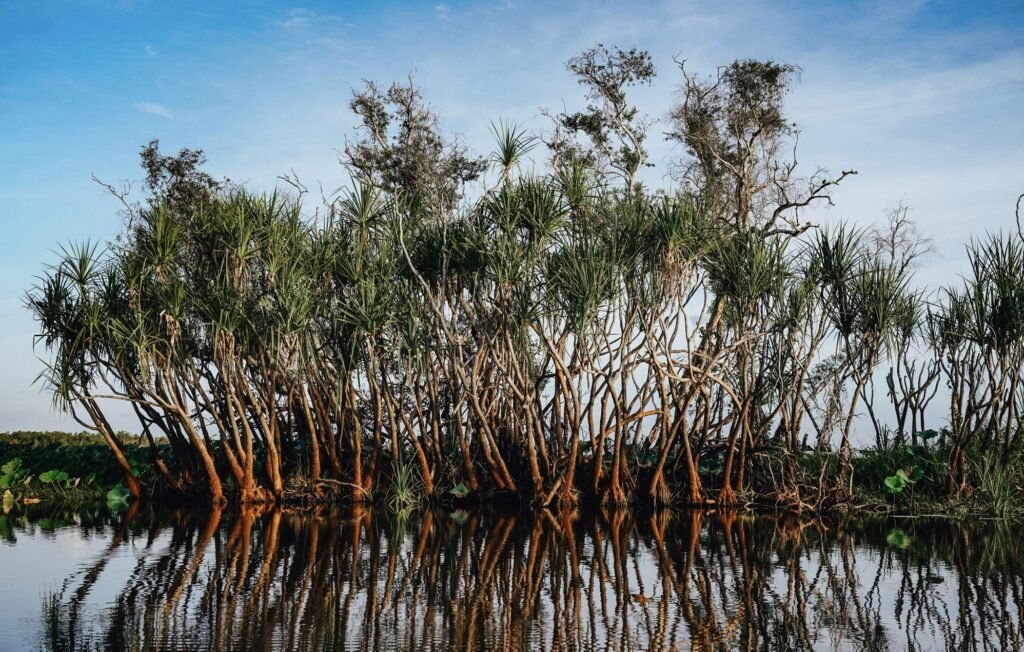
- Wetlands: Join a guided cruise at Yellow Water (Ngurrungurrudjba) or another operating wetland experience.
- Take your time: Kakadu is vast; stay two or three nights rather than attempting a rushed day trip.
Day 6: Katherine and Nitmiluk
- Nitmiluk Gorge: Join a cruise, paddle or guided cultural experience suited to the season.
- Katherine: Visit local galleries and services, or add Leliyn / Edith Falls if access permits.
Day 7: Fly to Alice Springs
- Alice Springs: Explore galleries, museums and desert landscapes, choosing reputable venues that work ethically with Aboriginal artists.
- Prepare: Collect supplies and confirm conditions for the Red Centre road journey.
Day 8: Tjoritja / West MacDonnell Ranges
- Day trip: Visit selected accessible gorges, waterholes and walking areas rather than trying to cover the entire range.
- Country and culture: Follow signs, closures and guidance at culturally significant places.
Days 9–10: Watarrka / Kings Canyon
- Travel south-west: Allow generous time, fuel safely and stop only at established places.
- Kings Canyon: Choose the Rim Walk or a shorter canyon-floor walk according to heat, fitness and closure times.
- Overnight: Stay locally to walk early and experience the desert after dark.
Days 11–12: Uluṟu-Kata Tjuṯa
- Cultural Centre first: Learn about Aṉangu culture, Tjukurpa and visitor responsibilities before exploring.
- Uluṟu: Walk an open public section of the base, join a ranger or cultural activity, and use designated sunrise or sunset areas.
- Kata Tjuṯa: Visit Walpa Gorge or another open walk in cool conditions; heat closures may apply.
- Departure: Fly from Yulara or return to Alice Springs with adequate time and rest.
Living Aboriginal Cultures
The Northern Territory is home to many distinct Aboriginal nations, languages and cultural traditions; there is no single Aboriginal experience. Culture is living, contemporary and inseparable from Country. Visitors can support respectful tourism by choosing Traditional Owner-led walks, cruises, art centres, festivals and food experiences.
- Learn locally: Begin at cultural or visitor centres and take time to understand whose Country you are visiting.
- Choose authentic experiences: Book recognised Aboriginal-owned or guided activities and buy art from reputable art centres or ethical dealers.
- Follow cultural protocols: Respect requests about photography, restricted stories, sacred places and where visitors may walk.
- Use local place names: Notice and use dual names such as Uluṟu, Kata Tjuṯa, Watarrka, Tjoritja and Nitmiluk where provided.
- Do not climb Uluṟu: The climb is permanently closed. Experience the national park through culture, public walks and designated viewing areas.
- Ask before entering Aboriginal land: Permits may be needed beyond public highways and visitor areas.
Where to Stay
- Darwin: Best for the waterfront, markets, museums and day tours, with the Territory’s broadest accommodation range.
- Jabiru or Cooinda: Practical Kakadu bases for rock-art areas, wetlands cruises and ranger activities.
- Katherine: Convenient for Nitmiluk, regional galleries and the journey between Darwin and Central Australia.
- Alice Springs: Best for services, galleries, desert attractions and Tjoritja / West MacDonnell Ranges.
- Kings Canyon: Stay nearby to begin walks early and reduce long same-day drives.
- Yulara: The main accommodation and services base for Uluṟu-Kata Tjuṯa National Park, with options from camping to luxury lodges.
Booking tip: Reserve early in the cooler months, during festivals and for remote lodges, cruises and campsites. Browse regions and current trip planning through Tourism NT.
Where to Eat and Drink
- Darwin: Seek tropical produce, seafood, laksa, open-air markets and restaurants shaped by the city’s Asian and multicultural communities.
- Kakadu: Dining is concentrated around Jabiru, Cooinda and accommodation venues; confirm hours and carry supplies.
- Katherine: Find cafés, pubs, local produce and seasonal dining, with fewer late options than Darwin.
- Alice Springs: Explore cafés, pubs, bush-food-inspired menus and a diverse local dining scene.
- Yulara and Kings Canyon: Book popular dinners and special desert experiences early; choices are limited and prices reflect remote logistics.
Never rely on a single remote venue being open. Carry water and backup food, and confirm dietary requirements before travelling.
Attractions and Experiences
| Area | Highlights |
| Darwin and Litchfield | Waterfront, museums, markets, harbour sunsets, Aboriginal cultural tours, waterfalls and monsoon forest. |
| Kakadu | Living Bininj/Mungguy culture, rock art, stone country, floodplains, wetlands cruises, birds and seasonal waterfalls. |
| Katherine and Nitmiluk | Nitmiluk Gorge cruises and paddling, Jawoyn cultural experiences, Leliyn / Edith Falls and regional art. |
| Alice Springs and Tjoritja | Desert galleries, wildlife, telegraph history, mountain ranges, gorges, waterholes and the Larapinta Trail. |
| Watarrka | Kings Canyon, early-morning walks, sandstone cliffs, sheltered vegetation and Luritja cultural experiences. |
| Uluṟu-Kata Tjuṯa | Aṉangu culture, Cultural Centre, public base walks, Kata Tjuṯa walks, ranger activities and designated sunrise and sunset viewing. |
| Barkly and beyond | Karlu Karlu / Devils Marbles, Tennant Creek, vast pastoral landscapes, dark skies and long-distance road journeys. |
Important Tips for Travellers
- Check access every day: Roads, tracks, water crossings and park sites can change quickly. Use Road Report NT and official park updates before departure.
- Plan around heat: Walk early, carry more water than you expect to need, wear sun protection and obey heat closures.
- Take crocodile warnings seriously: In the Top End, never assume water is safe. Swim only where authorities explicitly advise that it is open, and obey every sign.
- Carry fuel and supplies: Distances are large, phone coverage is limited and services can close early or seasonally.
- Avoid fatigue: Do not combine long drives with dawn starts, sunset viewing or strenuous walks without adequate rest.
- Choose the right vehicle: Many headline attractions are reached by sealed roads, but some sites require high-clearance four-wheel drive. Check rental agreements.
- Buy passes and book ahead: Kakadu and Uluṟu-Kata Tjuṯa have park passes; cruises, campsites and guided cultural tours can sell out.
- Respect images and sacred places: Follow photography signs and do not publish culturally sensitive images. Remain on public tracks.
- Check permits: Aboriginal land outside public visitor routes may require permission from the relevant land council.
- Use official guidance: Consult the Kakadu Visitor Guide and Uluṟu-Kata Tjuṯa National Park before visiting.
Frequently Asked Questions
Can I combine Darwin, Kakadu and Uluṟu in one week?
It is possible by flying, but rushed. A better plan is one week in either the Top End or Red Centre, or 12 to 14 days for both.
How many nights should I spend at Uluṟu?
Allow at least two nights, and preferably three, to visit the Cultural Centre, explore public walks at Uluṟu and Kata Tjuṯa, and experience changing light without rushing.
Can Kakadu be a day trip from Darwin?
Some tours operate as long day trips, but Kakadu’s scale deserves two or three nights. Access, weather and seasonal conditions determine what can be visited.
Is the Northern Territory suitable for children?
Yes, with careful planning. Choose shorter walks, manage heat and hydration, maintain close supervision near water and cliffs, and build in rest between long drives.
Do I need a four-wheel-drive vehicle?
Not for Darwin, Alice Springs, Yulara, Uluṟu-Kata Tjuṯa or the main sealed touring route. Some Kakadu, Litchfield, Tjoritja and remote-area sites require four-wheel drive or close seasonally.
What is the most respectful way to experience Aboriginal culture?
Choose Aboriginal-owned or Traditional Owner-led experiences, begin at cultural centres, listen without expecting access to restricted knowledge, ask before taking photographs and follow local instructions on Country.
When is the best time to visit?
May to September suits many first-time visitors because the Red Centre is generally cooler and the Top End is in its dry season. Other seasons offer dramatic landscapes and fewer visitors, but heat, storms and restricted access require flexible plans.
Where can I get current visitor information?
Start with Tourism NT, Kakadu National Park, Uluṟu-Kata Tjuṯa National Park and Road Report NT, then confirm tours, permits, passes and accommodation directly.