Australia combines lively coastal cities, distinctive wildlife, ancient living cultures and landscapes ranging from tropical rainforest to desert and alpine country.
Its scale rewards focused itineraries: choose one or two regions rather than trying to cover the continent in a single trip.
Entry and arrival
Most visitors need a valid visa before travel. Options depend on passport and purpose: eligible travellers may use an Electronic Travel Authority (subclass 601), which permits stays of up to three months per visit, or another visitor visa. Confirm eligibility and apply through the Department of Home Affairs visa finder before booking non-refundable travel.
On arrival, declare food, plant, animal and other restricted items. Most passengers still complete an Incoming Passenger Card; a digital Australia Travel Declaration is being piloted and is scheduled for broader rollout. Follow the instructions provided by your airline and the Australian Border Force.
When to go
- Spring and autumn: Generally the best times for southern cities, with milder weather.
- Summer: Popular for southern beaches; expect hotter weather and peak season demand.
- Winter: Well suited to the tropical north, central Australia and alpine snow trips.
- Tropical north: The wet season is roughly November to April; the dry season runs from May to October.
- Before travel: Check regional weather, bushfire, flood and marine conditions close to departure.
Where to go

- Sydney: harbour landmarks, beaches and the Blue Mountains.
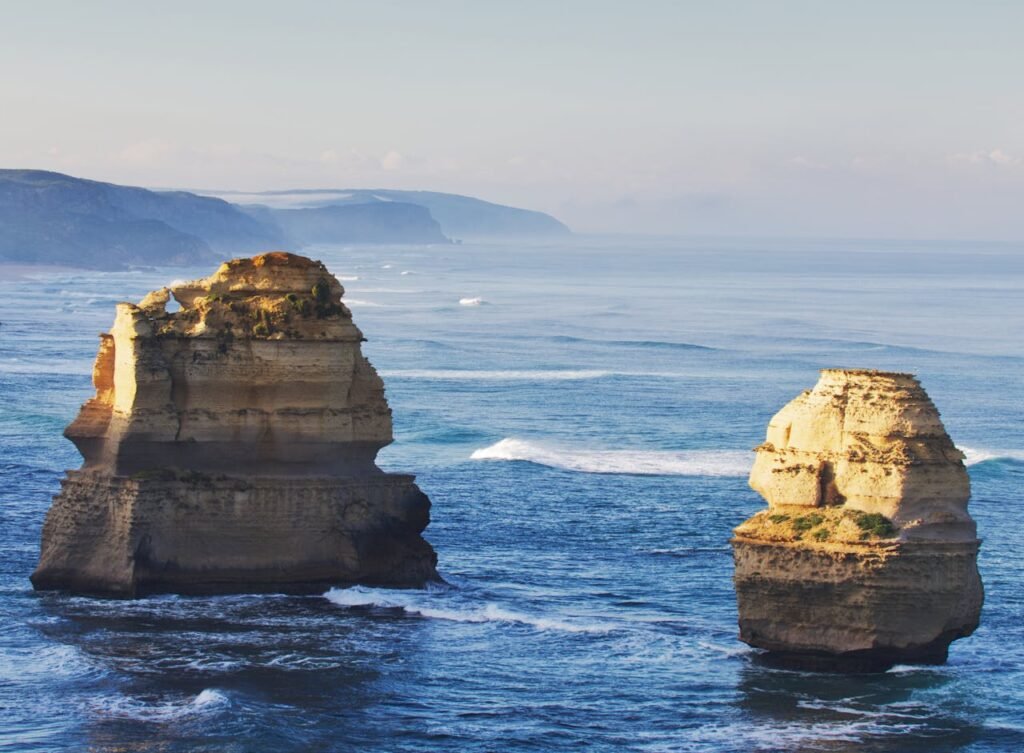
- Melbourne and Victoria: food, arts, sport, wine regions and the Great Ocean Road.
- Queensland: Brisbane, tropical islands and Great Barrier Reef gateways.
- South and Western Australia: Adelaide’s wine regions, Perth, beaches and remote coastal scenery.
- Tasmania: wilderness walks, heritage and local produce. Hobart and Devonport.
- Northern Territory and the Red Centre: Uluru, Kakadu, living Aboriginal cultures and vast landscapes.
Getting around
Fly between distant regions; use trains, buses and local public transport within major centres. A car is useful for regional travel, but distances, fuel gaps, wildlife and extreme weather require planning.
Australia drives on the left. Overseas licence rules vary by state and territory, so check the relevant road authority and carry an English translation or International Driving Permit when required.
Costs, stays and connectivity
Australia uses the Australian dollar (AUD), and cards are widely accepted. Prices vary too much for a reliable single daily budget, so compare current accommodation, transport and activity costs for your route. Book early for school holidays, major events and remote destinations. Hotels, hostels, holiday parks, apartments and campsites cover most budgets; mobile coverage can be limited outside towns and highways.
Culture, food and responsible travel
Seek Aboriginal and Torres Strait Islander owned tours, follow guidance at sacred and culturally significant places, and use the Traditional place names preferred locally. Australian dining reflects Indigenous ingredients and strong global influences; seafood, café culture, regional produce and wine are highlights. Tipping is optional rather than expected.

Health and safety
- Call Triple Zero (000) for police, fire or ambulance emergencies.
- Buy travel insurance that covers medical care, cancellations and planned activities.
- Keep routine vaccinations current and check whether itinerary specific or entry related requirements apply.
- Use SPF 50+ sunscreen, protective clothing and plenty of water.
- Swim between patrol flags, heed wildlife and park warnings, and avoid remote drives without fuel, water and communications planning.
SIM Cards and Mobile Calling
Getting a SIM card in Australia is quick and easy for first‑time travellers. You can buy a prepaid SIM or eSIM as soon as you land at major airports, where Telstra, Optus, Vodafone, and convenience stores sell traveller‑friendly packs. If you prefer cheaper deals, supermarkets like Coles and Woolworths or 7‑Eleven stores in the city offer great value options such as Boost Mobile or amaysim.
Most plans include unlimited calls and texts within Australia, generous data, and simple activation – just make sure your phone is unlocked (not locked to any carrier), tap in your passport details if required, and you’re ready to explore with reliable coverage across the country.
Practical Tips for Travellers
- Language: English is Australia’s national language and is spoken with a distinctive Australian accent. Local slang is common: “arvo” means afternoon, “servo” means service station and “thongs” means flip flops.
- Connectivity: Prepaid SIM cards and mobile data are readily available, and free Wi-Fi is common in hotels, cafés and many public spaces. Coverage may be limited in remote areas.
- Packing: Pack for varied climates, including sun protection, insect repellent and layers. Bring an adaptor for Australian Type I power sockets.
Sample routes
- 7 days: Sydney plus the Blue Mountains, or Melbourne plus the Great Ocean Road.
- 14 days: Combine two regions, such as Melbourne–Sydney–Brisbane or Cairns–Brisbane–Sydney.
- 21 days: Add a contrasting region such as Tasmania, the Red Centre or Western Australia, using flights to limit travel time.