Sydney is well suited to car free sightseeing. Its integrated public transport network links the city centre with harbour precincts, beaches, neighbourhoods and regional day trip destinations.
Visitors can use buses, trains, ferries, light rail and metro services across the city, making it easy to combine famous landmarks with local experiences.
Understanding Sydney’s Transport Network
- Metro: Fast, frequent services through the city and to the north west and south west. Central city stations include Barangaroo, Martin Place and Gadigal.
- Trains: Useful for the airport, Circular Quay, Bondi Junction, North Sydney and longer trips to places such as the Blue Mountains.
- Buses: Essential for beaches and suburbs not directly served by rail. Popular visitor routes include the 333 between Circular Quay and Bondi and the 373 between Museum and Coogee.
- Ferries: A scenic way to cross the harbour and reach Manly, Taronga Zoo, Watsons Bay, Cockatoo Island and Parramatta.
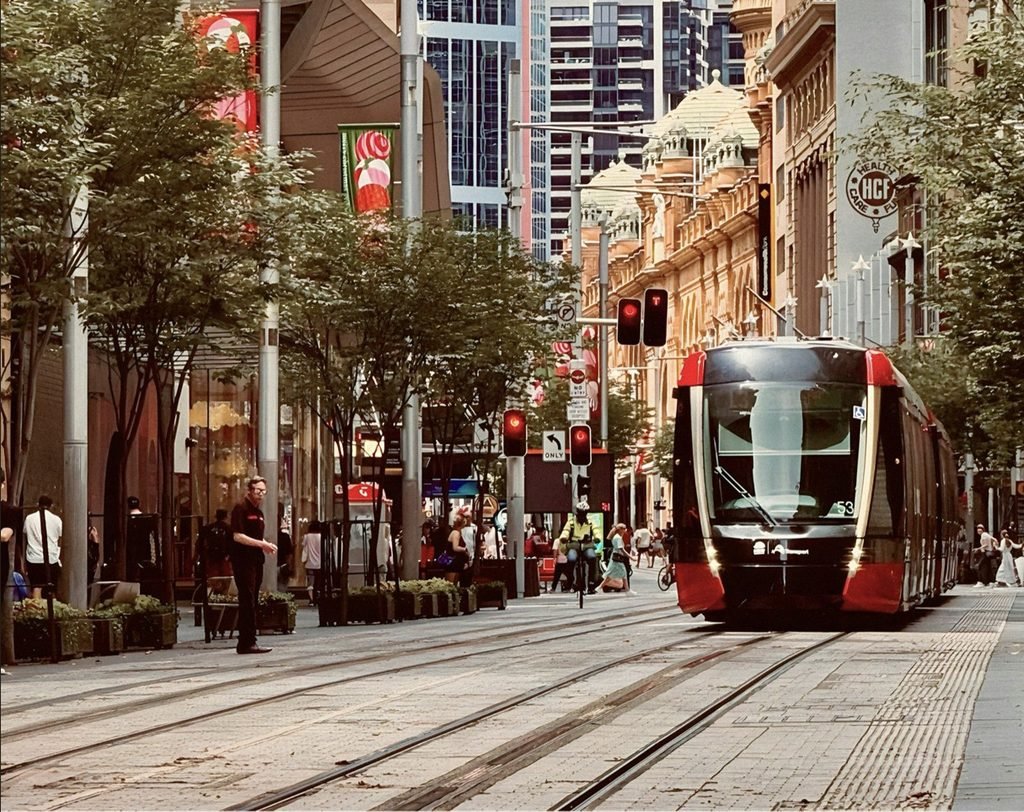
- Light rail: Convenient for travel along George Street and to destinations including Chinatown, Darling Harbour, Randwick and Kingsford.
Paying for Travel
Most adult visitors can tap on and tap off with the same contactless American Express, Mastercard or Visa card, phone or watch. An Adult Opal card is another convenient option.
Use one payment method for the entire journey. Switching between a physical card and its digital wallet version can prevent the system from matching your taps correctly.
Opal and contactless users receive daily and weekly caps, transfer discounts and a 30% off peak discount on metro, train, bus and light rail fares. Always tap off; otherwise, a default fare may apply. Children and travellers using special concession fares should check eligibility and obtain the appropriate Opal card before travel.
Planning Each Journey
Transport for NSW’s Trip Planner provides route options, walking connections, fares and real time departure information. Check it immediately before leaving because platforms, stops and services can change. Allow extra time for transfers, especially at large interchanges such as Central, Town Hall, Wynyard and Circular Quay.
From Sydney Airport to the City
The T8 Airport & South Line serves stations beneath the domestic and international terminals, generally operating daily between 5 a.m. and midnight. The airport train is usually the simplest option for the city centre, but an additional station access fee applies and is not included in the standard daily or weekly travel caps. Route 420 is a bus alternative and also links the domestic and international airports.
Major Attractions Within Walking Distance of a Bus Stop
Stop names and route numbers can change, so confirm the best stop in the Trip Planner on the day. The following major sights are typically only a short walk from nearby city or suburban bus stops:
| Attraction | Useful bus stop or precinct | Approximate walk from nearest public transport |
| Sydney Opera House | Circular Quay | About 8 to 10 minutes along the waterfront |
| The Rocks and Museum of Contemporary Art | Circular Quay | About 3 to 8 minutes |
| Royal Botanic Garden | Macquarie Street or Circular Quay | About 5 to 10 minutes, depending on the entrance |
| Queen Victoria Building | Town Hall / Queen Victoria Building | About 1 to 3 minutes |
| Australian Museum | College Street near William Street | About 2 to 5 minutes |
| Darling Harbour, SEA LIFE Sydney Aquarium and WILD LIFE Sydney Zoo | King Street or Town Hall precinct | About 8 to 15 minutes |
| Bondi Beach | Campbell Parade at Bondi Beach | About 1 to 5 minutes |
| Coogee Beach | Arden Street at Coogee | About 2 to 5 minutes |
| Art Gallery of New South Wales | Art Gallery Road / nearby city stops | About 3 to 10 minutes |
| Taronga Zoo | Bradleys Head Road near the zoo entrance | About 2 to 5 minutes; the ferry is often the more scenic approach |
Circular Quay is especially useful for visitors because the Sydney Opera House is nearby and trains, ferries and buses meet in the same precinct. For Bondi Beach, the frequent 333 is a well known connection from Circular Quay, while the 373 connects the Museum area with Coogee.
Regional Travel Around Sydney
Sydney is a useful base for day trips and longer journeys across New South Wales. Intercity trains connect Sydney with the Blue Mountains, Central Coast and Hunter, Illawarra and South Coast, and Southern Highlands. These services leave from Central and selected suburban stations, although journey times can be long, so visitors should check the final return service before setting out.
Easy Day Trips by Intercity Train
- Blue Mountains: Travel to Katoomba for access to Echo Point, the Three Sisters, Scenic World and nearby bushwalks. Intercity trains run from Sydney at least hourly and the journey to the upper Blue Mountains takes about two hours. Local buses connect Katoomba Station with Echo Point.
- Central Coast: Trains towards Gosford, Woy Woy and Wyong provide access to waterfront areas, national parks and coastal communities. Some attractions require a local bus, taxi or a longer walk from the station.
- Newcastle: Intercity trains travel north to Newcastle Interchange, where light rail continues towards the city centre and beaches.
- Wollongong and the South Coast: South Coast trains serve Wollongong and coastal towns. Check whether your chosen beach or attraction requires an onward bus connection.
- Southern Highlands: Services to towns such as Bowral are less frequent than many metropolitan trains, so careful timetable planning is important.
Tickets, Bookings and Luggage
Opal cards and contactless payments are accepted on Intercity trains to destinations including the Blue Mountains, Central Coast, Hunter and Illawarra.
Note: Longer distance NSW TrainLink Regional trains and coaches use reserved tickets, and Opal cards cannot be used. Book these journeys separately before travel, especially during school holidays, public holidays and major events.
NSW TrainLink Regional services reach more than 365 destinations across New South Wales and beyond. Regional journeys may combine a train and coach, so read the itinerary carefully and arrive early for connections. Luggage limits apply, and large or special items may need advance booking. Check service alerts and trackwork before departure, carry water and food where appropriate, and allow extra time when returning to Sydney.
Practical Tips for Stress Free Travel
Late night services are limited. Most regular services reduce or stop around midnight. NightRide buses replace many Sydney train services between midnight and 4.30 am, while some bus routes operate throughout the night.
- Keep your payment card or device ready before boarding, and remember to tap off.
- Use the front door to board buses unless signs or staff direct otherwise.
- Press the stop button early enough to alert the driver.
- Stand clear of train, metro and light-rail doors and let passengers exit first.
- Check service alerts before longer trips or weekend travel.
- Carry water, sun protection and comfortable walking shoes; many of Sydney’s best precincts are explored on foot.
- For accessible travel, use the Trip Planner’s accessibility information and allow extra transfer time.
Important Links and Apps
Save these official resources before travelling. They provide current route, fare, disruption and accessibility information across Sydney and New South Wales.
- Opal Travel app: The official Transport for NSW app for planning journeys, viewing real time departures, receiving service alerts, checking contactless fare activity and managing an Opal card.
- Trip Planner: Plan journeys by metro, train, bus, ferry, light rail and coach, with walking connections, fare estimates and real time information where available.
- Travel alerts: Check current and planned disruptions, weekend trackwork and updates by route or transport mode.
- Transport for NSW planning page: Find timetables, stop details, maps, visitor guidance and regional booking options in one place.
- Accessible travel information: Check accessible stations, stops, wharves and services, including guidance for mobility aids, prams and assistance animals.
- Public transport essentials: Read a visitor overview of payments, Opal travel, regional services and translated travel guides.