Hobart is a memorable introduction to Tasmania: a compact waterfront city with sandstone streets, ambitious art, excellent produce and wilderness at its doorstep.
How Long to Stay in Hobart
Hobart deserves at least three days, while five days gives you time to explore the city at an enjoyable pace and add Bruny Island or the Tasman Peninsula. With a week or more, you can see more of southern Tasmania without rushing.
- 2 days, a quick highlights visit: Explore Salamanca, Battery Point, the waterfront and one major attraction, but skip longer regional trips.
- 3 days, the recommended minimum: Plan one day around the waterfront and historic centre, one for MONA and northern Hobart, and one on kunanyi Mount Wellington or in Richmond.
- 5 days, the sweet spot: Add Bruny Island or Port Arthur, with extra time for markets, museums and local dining.
- 7 days, a relaxed stay: Include both Bruny Island and the Tasman Peninsula, plus the Huon Valley or additional walks.
- 10 days or more, Hobart and beyond: Add several nights on the east coast, in Freycinet National Park or around Mount Field and the Derwent Valley.
Before You Go
- When to visit: Summer has long daylight hours and mild temperatures, while autumn brings calm conditions and seasonal produce. Winter is cold but atmospheric, and spring can be windy and changeable.
- Where to stay: Choose the CBD or waterfront for convenience, Salamanca and Battery Point for historic character, North Hobart for restaurants, or Sandy Bay for a quieter base.
- Money and power: Australia uses Australian dollars and Type I power plugs. Cards are widely accepted, but a small amount of cash can be useful at markets and regional stops.
What to Pack for Hobart
Hobart has a cool maritime climate and conditions can change quickly. Pack sunscreen, sunglasses, comfortable walking shoes, a warm layer and a rain resistant jacket throughout the year. Bring a daypack and water bottle for mountain and regional outings.
Seasonal Additions
- Summer (December to February): Pack light clothing, sun protection and a jumper or jacket for cool evenings and windy lookouts.
- Autumn (March to May): Choose warm layers, a rain jacket and closed shoes. Temperatures drop noticeably after sunset.
- Winter (June to August): Bring an insulating layer, warm coat, scarf, beanie, gloves and waterproof shoes. Snow and ice can affect mountain access.
- Spring (September to November): Pack adaptable layers, wind protection and a reliable rain jacket for rapidly changing conditions.
Useful Extras
- Power adapter: Australia uses Type I plugs and an electricity supply of 230 volts.
- Reusable water bottle: Tap water is safe to drink, and a bottle is useful during walks and day trips.
- Small daypack: Carry water, sun protection, rain gear and an extra warm layer.
- Travel documents: Keep secure digital and paper copies of your passport, visa or travel authorisation, insurance details and bookings.
Seven Places Worth Your Time
- Salamanca Place and Battery Point: Walk among sandstone warehouses, galleries and historic cottages. Visit Salamanca Market on Saturday morning if your dates align.
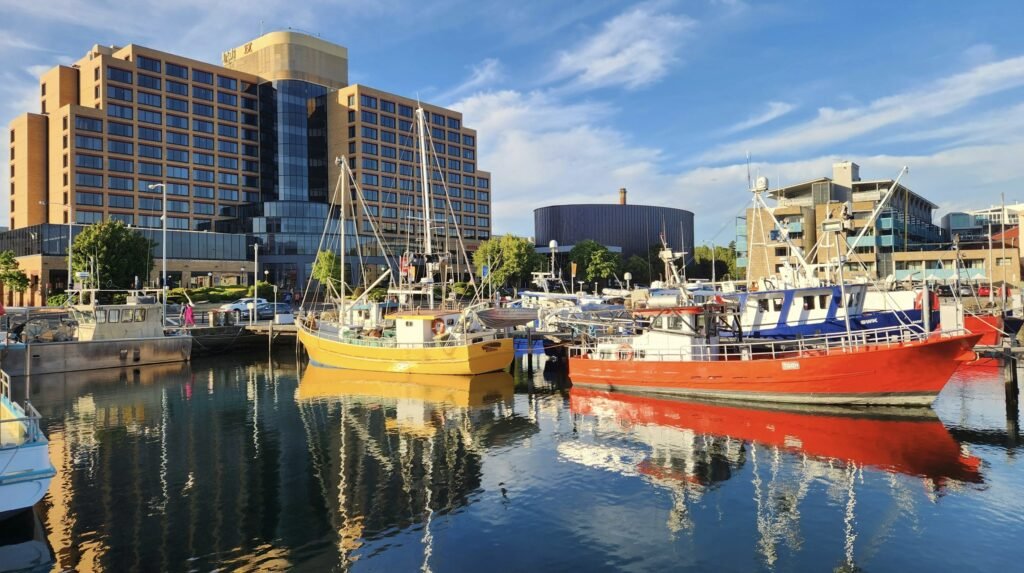
- Hobart waterfront: Explore Constitution Dock, Brooke Street Pier and the working harbour, then follow the shore towards the Tasmanian Museum and Art Gallery.
- MONA: Take the ferry to the Museum of Old and New Art for contemporary art, architecture and river views. Check opening days and book ahead.
- kunanyi Mount Wellington: Travel to the summit or walk from The Springs for broad views across Hobart and southern Tasmania. Check weather and road status first.
- Royal Tasmanian Botanical Gardens: Enjoy peaceful grounds, cool climate collections and an easy break from the city centre.
- North Hobart and South Hobart: Explore restaurants, cafés, the State Cinema, Cascade Gardens and nearby walking routes.
- A regional day trip: Choose Bruny Island for coast and produce, Port Arthur for history, Richmond for heritage streets, or the Huon Valley for orchards and scenery.
A Simple Three Day Itinerary
Day 1: Waterfront, Salamanca and Battery Point
Begin at the waterfront and Tasmanian Museum and Art Gallery, then explore Salamanca Place and Battery Point. If it is Saturday, visit Salamanca Market in the morning. Finish with dinner around Salamanca or the city centre.
Day 2: MONA and Local Neighbourhoods
Take the ferry to MONA and allow several hours for the museum and grounds. Return to the city, then spend the evening dining in North Hobart or exploring the waterfront.
Day 3: Mountain, History or Island Scenery
Visit kunanyi Mount Wellington and the Royal Tasmanian Botanical Gardens, or choose Richmond for heritage and local produce. Travellers with a full day can take a guided trip to Bruny Island or Port Arthur.
Getting Around
Central Hobart is compact and easy to explore on foot. Metro Tasmania operates local buses, and its app provides live tracking and journey planning. Public bus travel is currently free across Tasmania until 30 June 2027, so no fare or GreenCard is required during this period. Hobart Airport has no rail link; use the airport shuttle, taxi, rideshare or a hire car. A car or organised tour is useful for many regional day trips.
Internet, SIM Cards and Useful Apps
Hobart has reliable 4G and 5G coverage. Telstra, Optus and Vodafone operate the main networks, with lower cost providers using their infrastructure. Reception may weaken in national parks, on islands and across remote Tasmania.
SIM and eSIM Options
Buy prepaid SIMs at Hobart Airport, carrier shops, supermarkets or convenience stores. Four week plans often cost about AU$25 to AU$40. Compare data, coverage, validity and activation requirements.
Unlocked compatible phones can use a local or travel eSIM arranged before arrival. Examples include Airalo, Ubigi and Holafly. Check the network, activation date, hotspot rules and whether the plan includes calls or only data. Free WiFi is common at hotels, cafés, libraries and attractions, but speed varies. Avoid sensitive transactions on open networks.
Useful Apps
- Metro Tas: Plan local bus journeys and check live service information.
- Discover Tasmania: Build itineraries and find current visitor information across the state.
- Google Maps: Check walking directions and business hours, and save offline areas before regional trips.
- Uber: Compare rideshare fares and pickup points.
- National Parks Tasmania: Check park alerts, track information and visitor guidance.
- TasALERT: Monitor emergency warnings, road conditions and closures.
- AustralianETA: The Australian Government app for eligible passport holders applying for an Electronic Travel Authority.
Food
Hobart’s food scene highlights seafood, cool climate produce and Tasmanian drinks. Browse Salamanca Market, dine along the waterfront and explore restaurants in North Hobart, Salamanca and the CBD. Regional trips add oysters, cheese, berries, cider and wine. Reserve popular restaurants, MONA dining and weekend experiences in advance.
Safety and Local Etiquette
- Weather can change quickly. Carry warm and waterproof layers, even when the city forecast looks mild.
- Check Pinnacle Road, park alerts and emergency warnings before visiting kunanyi Mount Wellington or regional areas.
- Drive carefully on winding roads and slow down around dawn and dusk when wildlife is active.
- At beaches and coastal cliffs, follow warning signs and keep back from unprotected edges.
- Call 000 for police, fire or ambulance emergencies.
- Hobart, also known as nipaluna, stands on the traditional lands of the palawa people. Treat cultural places with respect and follow signage.
Official Planning Links
- Discover Tasmania: official attractions, itineraries and regional planning.
- City of Hobart visitor services: local maps, accessibility and travel assistance.
- Salamanca Market: official Saturday hours and visitor information.
- Metro Tasmania: bus routes, live tracking and current travel information.
- Metro free travel information: current GreenCard and fare guidance.
- kunanyi Mount Wellington guide: summit access, walks and road status advice.
- Port Arthur and Tasman Peninsula: history, coastal scenery and tour ideas.
- Hobart climate information: official seasonal temperature and rainfall statistics.