The Nothing Phone 4 family is best understood as a three-model range built around Nothing’s transparent design language, Glyph Interface, Nothing OS and Essential AI tools. Because Nothing’s official pages present the devices as Phone (4a), Phone (4a) Pro and Phone (4b), we thought of using “Nothing Phone 4 family” as a practical grouping rather than a separate official series name.
Across the range, the focus is on distinctive industrial design, strong camera hardware for the class, clean software and useful AI features that sit inside Nothing OS.
Variants in the Nothing Phone 4 Family
Nothing Phone (4a): The core model, designed around an advanced 3-camera system, up to 70x ultra zoom, Glyph Interface, Nothing OS and Essential AI tools.
Nothing Phone (4a) Pro: The higher-end 4a model, with a more premium build direction, a Pro 3-camera system with Sony sensor and the headline claim of up to 140x ultra zoom.
Nothing Phone (4b): A performance- and battery-focused model with a UV-coated unibody, IP64 dust and water resistance, a 5,200 mAh battery, Snapdragon performance improvements and gaming-oriented features.
Design and Build
Nothing’s design identity remains central to the Phone 4 family. Phone (4a) and Phone (4a) Pro continue the brand’s transparent-inspired look and Glyph Interface, while Phone (4b) introduces a UV-treated unibody inspired by Phone (4a) Pro. Nothing says Phone (4b) uses transparent design around the camera bump to reveal hints of the mechanics beneath, with clear thermoplastic polyurethane allowing the colour below to remain visible. Phone (4b) is also described as more bend resistant than previous models and rated IP64 for dust and water resistance for up to 20 minutes.
Key Features Across the Family
- Glyph Interface: Nothing’s signature lighting system remains part of the experience, supporting visual alerts and interaction patterns without relying only on the screen.
- Nothing OS with Essential AI tools: The family is promoted with Essential AI tools and Essential Space features that help capture, organise and analyse information.
- Advanced camera systems: Phone (4a) offers an advanced 3-camera system with up to 70x ultra zoom, while Phone (4a) Pro moves to a Pro 3-camera system with Sony sensor and up to 140x ultra zoom.
- Performance focus: Phone (4b) is positioned around an 8-core Snapdragon CPU, faster graphics, faster AI processing and a large cooling system for gaming and multitasking.
- Battery endurance: Phone (4b) is described by Nothing as its longest-lasting phone yet, with a 5,200 mAh battery and quoted usage figures for calls, music and video streaming.
- Transparent design language: The range keeps Nothing’s clear, mechanical and design-led personality, with Phone (4b) adding a stronger unibody approach.
Comparison Table: Phone (4a) vs Phone (4a) Pro vs Phone (4b)
| Category | Phone (4b) — White 8+128GB | Phone (4a) — Blue 12+256GB | Phone (4a) Pro — Black 12+256GB |
| Launch / availability | Announced July 2026; published listings indicate announcement on 7 July 2026 and expected/released availability around 17 July 2026. | Announced and released 5 March 2026; | Released 5 March 2026; |
| Operating system | Android 16 with Nothing OS 4.1; up to 3 major Android upgrades listed. | ||
| Processor | Qualcomm Snapdragon 6 Gen 4, 4 nm chipset with octa-core CPU: 1× Cortex-A720s at 2.3 GHz, 3× Cortex-A720s at 2.2 GHz, and 4× Cortex-A520s at 1.8 GHz. | Qualcomm Snapdragon 7s Gen 4, 4 nm chipset with octa-core CPU: 1× Cortex-A720 at 2.7 GHz, 3× Cortex-A720 at 2.4 GHz, and 4× Cortex-A520 at 1.8 GHz. | Qualcomm Snapdragon 7 Gen 4, 4 nm chipset with octa-core CPU: 1× Cortex-A720 at 2.8 GHz, 4× Cortex-A720 at 2.4 GHz, and 3× Cortex-A520 at 1.8 GHz. |
| Graphics | Adreno 810 integrated GPU. | Adreno 810 integrated GPU. | Adreno 722 integrated GPU. |
| RAM and Storage | 8GB+128GB 8GB+256GB (India only) UFS 2.2 internal storage; no microSD card slot listed. | 8GB+128GB 8GB+256GB 12GB+256GB UFS 3.1 internal storage; no microSD card slot listed. | 8GB+128GB 8GB+256GB 12GB+256GB UFS 3.1 internal storage; no microSD card slot listed. |
| Display | 6.77-inch AMOLED display with 1080 × 2344 resolution, 19.5:9 aspect ratio, approximately 381 ppi, and around 87.4% screen-to-body ratio. | 6.78-inch AMOLED display with 1224 × 2720 resolution, 20:9 aspect ratio, approximately 440 ppi, and around 87.2% screen-to-body ratio. | 6.83-inch AMOLED display with 1260 × 2800 resolution, 20:9 aspect ratio, approximately 440 ppi, and around 93.9% screen-to-body ratio. |
| Display performance | 120Hz refresh rate, 480Hz PWM dimming, 600 nits typical brightness, 1200 nits high-brightness mode, and 2000 nits peak brightness. | 120Hz refresh rate, 2160Hz PWM dimming, HDR10+, 800 nits typical brightness, 1600 nits high-brightness mode, and 4500 nits peak brightness. | 144Hz refresh rate, 2160Hz PWM dimming, HDR10+, 800 nits typical brightness, 1600 nits high-brightness mode, and 5000 nits peak brightness. |
| Display protection | Dragontail Pro Glass. | Corning Gorilla Glass 7i. | Corning Gorilla Glass 7i, Mohs level 5 listed. |
| Rear camera | Dual camera system: 50 MP wide camera, f/1.8, PDAF and OIS; 8 MP ultrawide camera, f/2.2, 15 mm, 120° field of view. | Triple camera system: 50 MP wide camera, f/1.9, PDAF and OIS; 50 MP periscope telephoto camera, f/2.9, 80 mm, PDAF, OIS, 3.5× optical zoom; 8 MP ultrawide camera, f/2.2, 15 mm, 120° field of view. | Triple camera system: 50 MP wide camera, f/1.9, 24 mm, dual pixel PDAF and OIS; 50 MP periscope telephoto camera, f/2.9, 80 mm, PDAF, OIS, 3.5× optical zoom; 8 MP ultrawide camera, f/2.2, 15 mm, 120° field of view. |
| Rear video | Up to 4K at 30 fps; 1080p at 30/60/120 fps with gyro-EIS. Features include LED flash, panorama, and Ultra XDR. | Up to 4K at 30 fps; 1080p at 30/60/120 fps with gyro-EIS, OIS, and Dolby Vision HDR. Features include LED flash, panorama, and Ultra XDR. | Up to 4K at 30 fps; 1080p at 30/60/120 fps with gyro-EIS, OIS, Dolby Vision HDR, and Ultra XDR. Features include LED flash and panorama. |
| Front camera | 16 MP selfie camera, f/2.4 wide, with 1080p video recording at 30 fps. | 32 MP selfie camera, f/2.2 wide, with 1080p video recording at 30 fps. | 32 MP selfie camera, f/2.2, 22 mm wide, with 1080p video recording at 30 fps. |
| Battery | 5200 mAh international battery. Nothing’s product copy describes this as the brand’s longest-lasting phone yet; India-specific listings cite a larger 6000 mAh version. | 5080 mAh international battery; India-specific listings cite a larger 5400 mAh version. | 5080 mAh international battery; India-specific listings cite a larger 5400 mAh version. |
| Charging | 33W wired charging with PPS, UFCS, and USB Power Delivery; 7.5W reverse wired charging also listed. | 50W wired charging, listed as 50% in 22 minutes and 100% in 64 minutes; 7.5W reverse wired charging also listed. | 50W wired charging, listed as 50% in 22 minutes and 100% in 64 minutes; 7.5W reverse wired charging also listed. |
| Build | Glass front, plastic frame, and plastic back with unibody design, soft-touch UV-treated coating, and transparent design details around the camera area. | Glass front with Gorilla Glass 7i, plastic frame, and glass back; notification LED/Glyph lighting on the back. | Glass front with Gorilla Glass 7i, aluminium frame, aluminium back, aircraft-grade aluminium unibody, and 137 individually addressable mini‑LEDs/Glyph lighting on the back. |
| Dimensions | 164.4 × 78.2 × 8.6 mm, approximately 6.47 × 3.08 × 0.34 inches. | 164 × 77.6 × 8.6 mm, approximately 6.46 × 3.06 × 0.34 inches. | 163.7 × 76.6 × 8.0 mm, approximately 6.44 × 3.02 × 0.31 inches. |
| Weight | 210 g, approximately 7.41 oz. | 204.5 g, approximately 7.23 oz. | 210 g, approximately 7.41 oz. |
| Durability | IP64 dust and water resistance; dust tight and resistant to water splashes, with manufacturer-rated water resistance up to 25 cm for 20 minutes noted in listings. | IP64 dust and water resistance; dust tight and resistant to water splashes, with manufacturer-rated water resistance up to 25 cm for 20 minutes listed. | IP65 dust and water resistance; dust tight and resistant to low-pressure water jets, with manufacturer-rated water resistance up to 25 cm for 20 minutes listed. |
| SIM | Dual Nano-SIM with dual physical SIM support listed. | Nano-SIM + Nano-SIM dual SIM support listed. | Nano-SIM + Nano-SIM + eSIM support listed, with a maximum of two active at a time; dual Nano-SIM variant also listed. |
| Network | GSM / HSPA / LTE / 5G; 5G band availability may vary by market or region. | ||
| Wi‑Fi | Wi‑Fi 802.11 a/b/g/n/ac/6, dual-band, with Wi‑Fi Direct. | ||
| Bluetooth | Bluetooth 6.0 with A2DP and LE support listed. | Bluetooth 5.4 with A2DP and LE support listed. | Bluetooth 5.4 with A2DP and LE support listed. |
| Positioning | GPS, Galileo, GLONASS, BDS, and QZSS multi-constellation satellite positioning. | ||
| NFC | Yes; availability may depend on market or region. | ||
| USB | USB Type‑C 2.0 with USB On‑The‑Go support listed. | ||
| Audio | Stereo speakers; no 3.5 mm headphone jack listed. | ||
| Sensors | Optical under-display fingerprint sensor, accelerometer, gyroscope, proximity sensor, and compass. | ||
| Colours | White, Black, and Blue. | Pink, White, Black, and Blue. | Black, Silver, and Pink. |
Note: Specifications can vary by market and configuration. Local availability, supported bands, NFC behaviour, charger inclusion, pricing, and warranty terms should be confirmed on the official Nothing product page before publication or purchase.
Key Differences Between Variants
Phone (4b) uses the Snapdragon 6 Gen 4 with 8GB RAM and 128GB storage in the listed configuration, making it the more entry-level performance option. Phone (4a) moves up to the Snapdragon 7s Gen 4 and is shown with 12GB RAM and 256GB storage, while Phone (4a) Pro uses the higher Snapdragon 7 Gen 4 with the same 12GB RAM and 256GB storage configuration. In practical terms, Phone (4a) Pro should be positioned as the strongest performer, Phone (4a) as the balanced mid-tier option, and Phone (4b) as the battery-focused value model.
Display quality is another major separator. Phone (4b) has a 6.77-inch AMOLED display with 120Hz refresh rate and 2000 nits peak brightness, while Phone (4a) increases resolution, pixel density, HDR10+ support and peak brightness to 4500 nits. Phone (4a) Pro goes further with the largest 6.83-inch AMOLED panel, 144Hz refresh rate, HDR10+, 5000 nits peak brightness and the highest listed screen-to-body ratio. This makes Phone (4a) Pro the strongest choice for users who prioritise display smoothness, brightness and a more immersive front design.
The camera difference is especially clear. Phone (4b) uses a dual-camera system with a 50 MP main camera and 8 MP ultrawide camera, while Phone (4a) and Phone (4a) Pro both add a 50 MP periscope telephoto camera with 3.5× optical zoom. Phone (4a) Pro has the most advanced listed main camera setup, with dual pixel PDAF, OIS and the same telephoto and ultrawide arrangement as Phone (4a). For selfies, Phone (4b) uses a 16 MP front camera, while Phone (4a) and Phone (4a) Pro both step up to 32 MP front cameras.
Battery and charging split the family in a different direction. Phone (4b) has the largest listed international battery at 5200 mAh, but the slowest wired charging at 33W. Phone (4a) and Phone (4a) Pro use 5080 mAh international batteries but support faster 50W wired charging, listed as reaching 50% in 22 minutes and 100% in 64 minutes. All three list 7.5W reverse wired charging, so Phone (4b) is the endurance-first choice, while Phone (4a) and Phone (4a) Pro are better for faster top-ups.
Build, durability and connectivity also differ. Phone (4b) uses a plastic-frame, plastic-back unibody with a soft-touch UV-treated finish and IP64 protection. Phone (4a) uses a glass back, plastic frame and Gorilla Glass 7i display protection, while Phone (4a) Pro moves to a more premium aluminium frame and aluminium back with aircraft-grade aluminium unibody construction, 137 individually addressable mini-LEDs and IP65 protection. Phone (4a) Pro is also the only model in the table that lists eSIM support alongside Nano-SIM options.
Colour availability is Phone (4b) in White, Black and Blue; Phone (4a) in Pink, White, Black and Blue; and Phone (4a) Pro in Black, Silver and Pink. That means Phone (4a) offers the widest colour range in the current comparison, while Phone (4a) Pro focuses on a smaller premium set and Phone (4b) keeps to three core finishes.
Which Nothing Phone 4 Model Should You Choose?
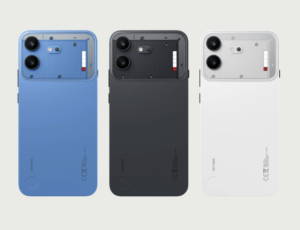
Choose Phone (4b) if you want the most affordable performance tier, the largest listed international battery, a practical 6.77-inch AMOLED display, Bluetooth 6.0 and a softer unibody design. It is the best fit for users who prioritise battery life, everyday reliability and value over the highest-resolution display or telephoto camera system.
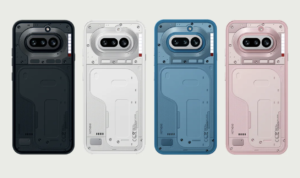
Choose Phone (4a) if you want the best balanced option. Compared with Phone (4b), it steps up to Snapdragon 7s Gen 4 performance, UFS 3.1 storage, a sharper HDR10+ AMOLED display, faster 50W charging, a 50 MP periscope telephoto camera with 3.5× optical zoom and a higher-resolution 32 MP selfie camera. It is the safest all-round choice for most buyers.
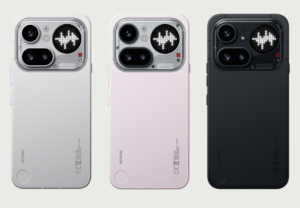
Choose Phone (4a) Pro if you want the most premium model in the family. It has the strongest listed chipset, the largest and brightest display, 144Hz refresh rate, the most premium aluminium unibody build, IP65 protection, 137 individually addressable mini-LEDs, eSIM support and the most advanced main-camera setup. It is the best choice for users who care most about performance, display quality, build finish and flagship-style features.