HOVERAir VERSA is built around a striking idea: one compact camera for both grounded and aerial storytelling. In handheld form, it is a three axis pocket gimbal camera with an integrated display, microphones and creator focused shooting tools.
Attach the optional Flight Kit and the same camera becomes an autonomous flying camera that can launch from a palm, track a subject and return without a traditional controller. It is an ambitious attempt to replace two devices with one modular system.
What Makes VERSA Different?
Most pocket cameras stay in your hand, while most compact drones are separate devices with their own batteries, controls and workflows. VERSA combines those roles around one removable camera body.
HOVERAir says the transition takes seconds: slide down the cover, secure the camera to the Flight Kit with the MagLatch system, unfold the propellers and launch.
The 163 gram handheld unit gains only 67 grams in flying form, bringing the complete setup to a claimed 230 grams.
Key Features at a Glance
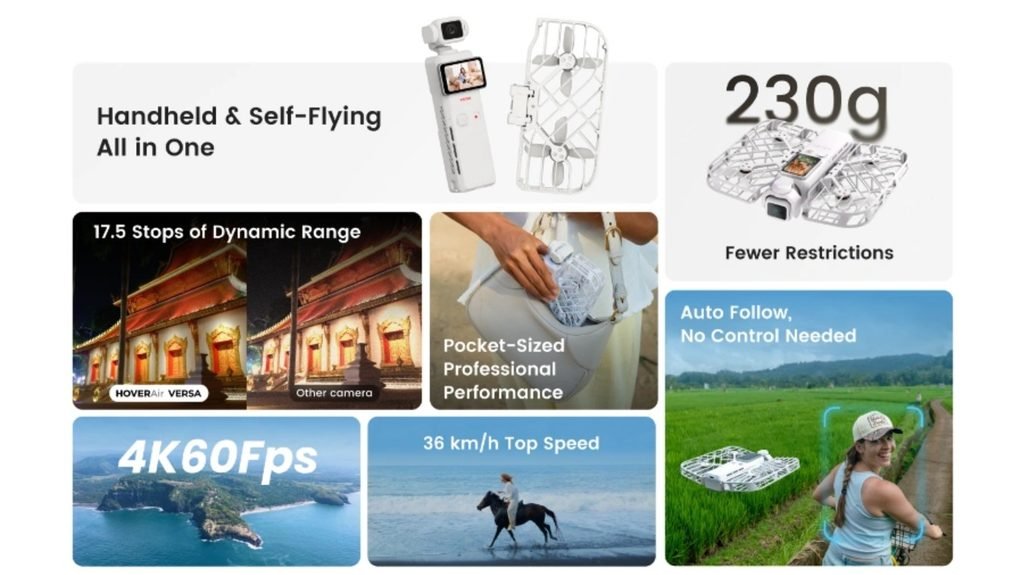
- Two in one modular design: Use VERSA as a handheld pocket gimbal camera or attach the optional Flight Kit for autonomous aerial filming.
- Compact flying weight: The complete camera and Flight Kit have a claimed combined weight of 230 grams.
- Large sensor for its size: A 1 over 1.3 inch sensor supports 12 megapixel photos and video at up to 4K and 60 frames per second.
- Advanced recording options: Supported modes include 10 bit HDR, H LOG and Open Gate capture for flexible editing and reframing.
- Three axis mechanical stabilisation: The gimbal is designed to produce smooth handheld and aerial footage.
- Native vertical shooting: The rotating camera supports portrait video for social platforms without relying only on a cropped widescreen image.
- Automatic subject tracking: AI assisted tracking and framing help solo creators remain in the shot.
- More than ten automated flight modes: Programmed movements can capture follows, reveals, orbits and other cinematic perspectives without conventional piloting.
- Palm launch and return: In flying mode, VERSA is designed to take off from and land in the user’s hand.
- Bright OLED touch display: The 1.64 inch screen offers touch control, haptic feedback and a claimed brightness of 800 nits.
- Built in audio: Two integrated microphones and a speaker support recording and playback directly on the device.
- Flexible storage: The camera includes 64 GB of internal storage and claimed microSD expansion up to 1 TB.
- Long handheld runtime: HOVERAir claims up to 180 minutes of use as a pocket camera, while aerial use is rated at up to 14 minutes per flight battery.
- Modern wireless connectivity: Bluetooth 5.3 and Wi Fi 6 support device communication and media transfer.
- 3D Worlds capture: A guided circular flight can record a scene for reconstruction as an interactive three dimensional environment.
Design and Everyday Handling
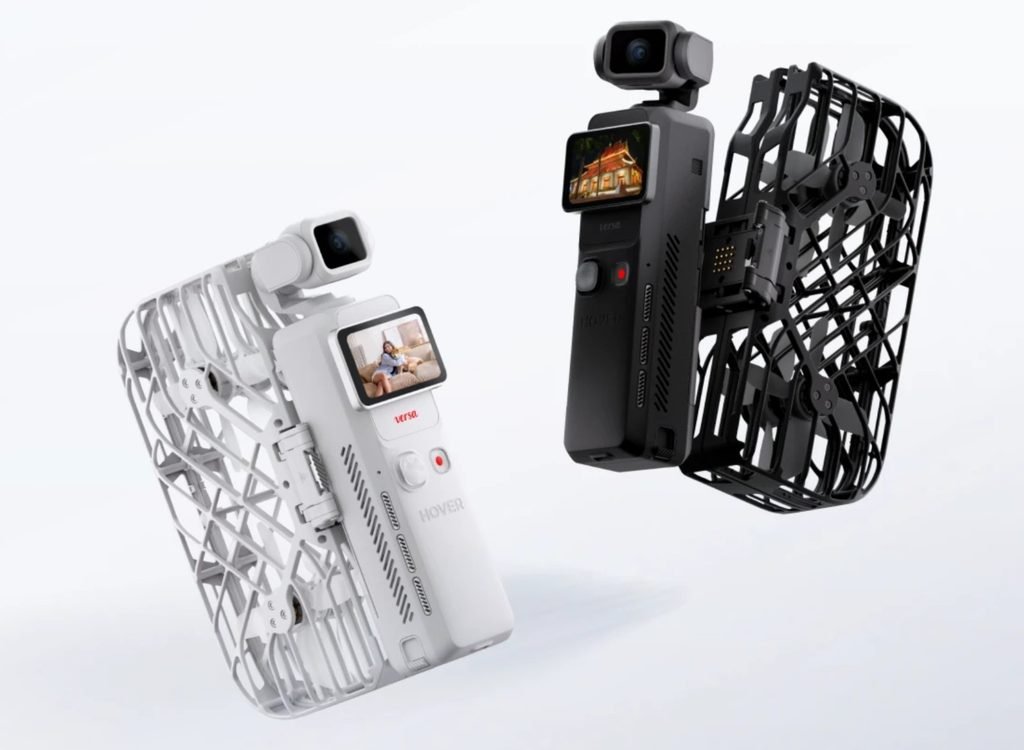
In handheld mode, VERSA resembles a modern pocket gimbal camera. Its 1.64 inch OLED touch display is rated at 326 pixels per inch, 800 nits of brightness and includes haptic feedback. Rotating the screen can wake the camera and begin recording, which is designed to reduce setup time.
Two microphones and an integrated speaker support direct audio capture and playback. The camera can also rotate for native vertical shooting, making it useful for short form social video as well as conventional widescreen footage.
Camera and Image Quality
VERSA uses a 1 over 1.3 inch sensor and records video at up to 4K resolution and 60 frames per second. It supports 10 bit HDR and H LOG recording, with HOVERAir claiming up to 17.5 stops of dynamic range in supported modes. Open Gate recording captures the full 4 by 3 sensor area, giving editors more room to produce widescreen, square or vertical versions from one take. The camera also offers 12 megapixel stills, a bright f 2 lens, two times zoom and AI assisted low light processing.
Those specifications are promising for a small creator camera, but the dynamic range figure is a manufacturer claim rather than an independently verified result. Final image quality will depend on processing, noise reduction, colour handling, stabilisation and performance in difficult lighting. Buyers should treat campaign footage as a preview until independent reviews test production hardware.
From Handheld Camera to Flying Camera
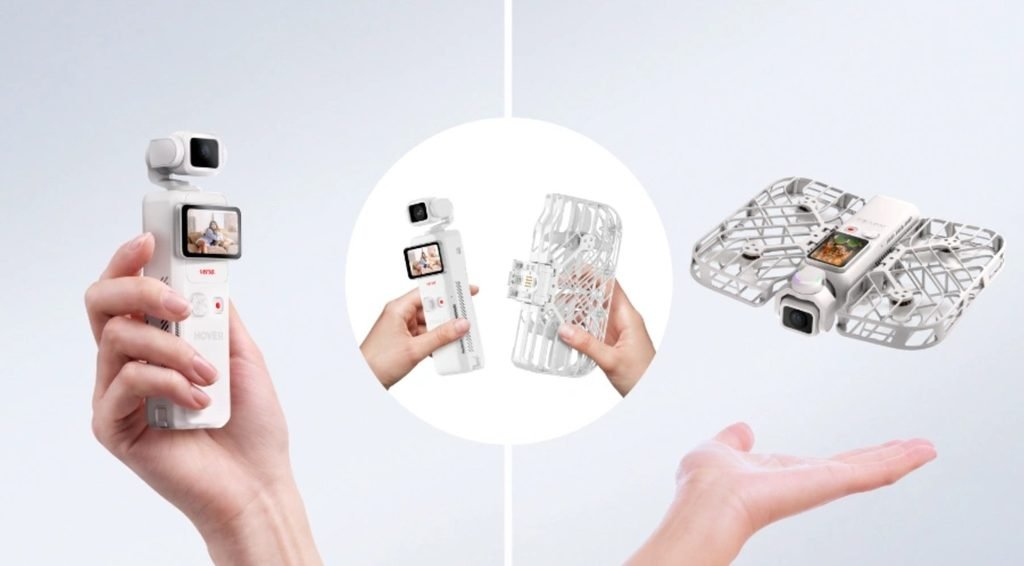
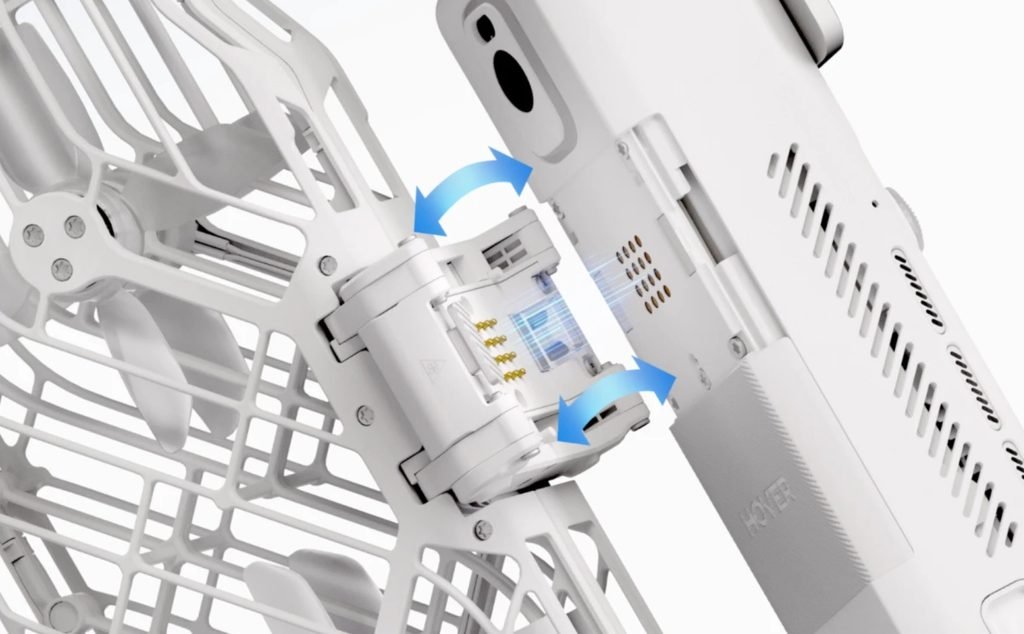
The Flight Kit is the defining feature. It attaches through HOVERAir’s MagLatch connection and uses pogo pins to deliver power to the motors. Once assembled, VERSA can take off from a palm, fly without a conventional remote and land back in the user’s hand. Automatic subject tracking and more than ten automated flight modes are intended to let solo creators capture follow shots, reveals, orbits and other cinematic movements without learning manual piloting.
HOVERAir lists a maximum flight time of about 14 minutes and a flight speed of up to 36 kilometres per hour in its campaign summary. Other campaign details describe faster tracking under selected conditions, so real performance may depend on the mode, environment and firmware. As with any compact flying camera, wind, temperature, subject visibility and local flight rules can affect the experience.
AI Features for Solo Creators
- Automatic subject tracking: VERSA is designed to follow a person and keep them framed without a camera operator.
- AI framing: Intelligent composition tools can help position the camera and maintain a balanced crop.
- Automated flight modes: More than ten programmed movements provide repeatable cinematic shots with minimal setup.
- 3D Worlds: A guided 360 degree flight captures a scene for reconstruction as an interactive three dimensional environment.
- AI Night enhancement: Computational processing aims to reduce noise and improve detail in low light footage.
Key Specifications
| Specification | Claimed detail |
| Image sensor | 1 over 1.3 inch sensor |
| Video | Up to 4K at 60 frames per second |
| Advanced video | 10 bit HDR, H LOG and Open Gate recording in supported modes |
| Photos | 12 megapixels |
| Lens | f 2 aperture with wide angle coverage |
| Stabilisation | Three axis mechanical gimbal |
| Display | 1.64 inch OLED touch screen, 800 nit brightness and haptic feedback |
| Audio | Two built in microphones and an integrated speaker |
| Storage | 64 GB internal storage and microSD expansion up to 1 TB |
| Handheld weight | 163 grams |
| Flight Kit weight | 67 grams |
| Complete flying weight | 230 grams |
| Flight time | Up to 14 minutes |
| Handheld runtime | Up to 180 minutes |
| Connectivity | Bluetooth 5.3 and Wi Fi 6 |
Accessories and Optional Extras
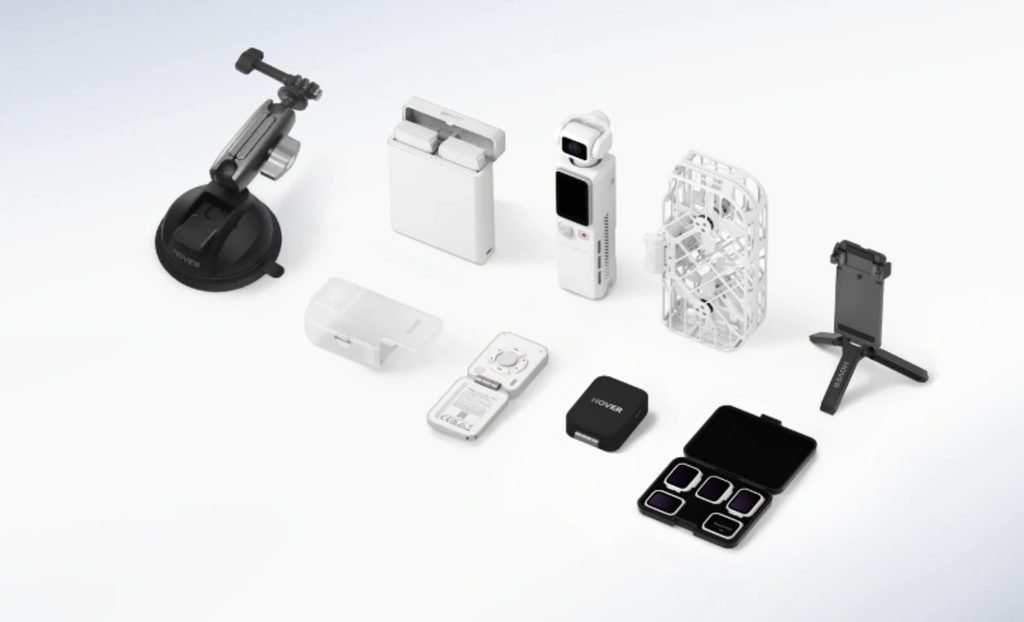
VERSA is a modular system, so accessories are central to how it changes from a pocket gimbal camera into a more complete creator kit. Availability, names and package contents may change between campaign tiers and final retail bundles. Buyers should confirm exactly what is included before ordering.
Flight Kit
The Flight Kit is the most important optional accessory because it gives VERSA its aerial capability. The lightweight module attaches through the MagLatch connection, supplies power to the motors through pogo pins and adds folding propellers and the flight hardware needed for palm launch, subject tracking and automated flight modes. Anyone purchasing VERSA primarily for aerial filming should check that their chosen package includes the Flight Kit rather than only the handheld camera.
Batteries and Charging
Extra batteries are among the most practical additions for creators because the claimed flight time is about 14 minutes. Higher campaign bundles may include additional batteries and charging hardware, reducing the need to stop between flights. A charging hub can simplify battery rotation on longer shooting days, while a suitable power adapter or portable power bank may help when travelling. Buyers should verify charger requirements, charge times and regional plug options in the final package details.
Protection and Carrying
Protective covers, a compact carrying case and storage pouches can keep the camera, Flight Kit, spare batteries and small parts together. These accessories are especially useful for travel because the modular design involves several separate components. A well fitted case also helps protect the gimbal, display, propellers and connection points when the system is packed in a larger bag.
Mounting and Handheld Options
Handheld extensions, tripod supports and compatible mounting accessories can broaden the types of shots VERSA can capture on the ground. An extension handle may help with low angle filming, self recording and smoother walking shots, while a small tripod can support static pieces to camera, time based recording or group shots. Confirm the supported connection and weight limits before using accessories from other manufacturers.
Storage and Creator Essentials
VERSA includes internal storage and supports microSD expansion up to the claimed 1 TB limit, making a fast compatible memory card a useful purchase for high resolution video. Other practical creator essentials include spare cables, a compact cleaning kit and audio accessories supported by the final hardware. Filters may also be useful for controlling exposure in bright conditions if official or compatible options become available.
Buying advice: The Flight Kit and spare power options will matter most to buyers who want regular aerial use. Travellers may place greater value on a protective case and compact charging setup, while video creators may prioritise storage, mounting and exposure control.
Who Is It For?
VERSA is aimed at travellers, families, vloggers, athletes and solo creators who want smooth handheld footage and occasional aerial perspectives without carrying two complete camera systems. It may be especially attractive for creators who publish across several formats, because Open Gate capture and vertical rotation make one recording easier to repurpose.
It is less suited to buyers who need long flight sessions, advanced manual piloting, large sensor performance or the reliability of mature professional camera and drone systems.
Pros
- One modular camera supports handheld and aerial shooting.
- Compact 230 gram flying configuration is easy to carry.
- Three axis stabilisation and 4K 60 video suit everyday creator work.
- Open Gate and vertical capture simplify publishing to several platforms.
- Palm launch, autonomous tracking and automated modes reduce the piloting barrier.
- Internal storage plus microSD expansion provides flexible recording capacity.
Cons
- Fourteen minutes of claimed flight time is short for extended aerial sessions.
- The hybrid design may not match a dedicated drone or larger camera in every situation.
- Important performance claims still need independent testing.
- Local drone laws, restricted airspace and registration rules may still apply.
- Crowdfunding introduces delivery, support and specification change risks.
- Optional bundles and accessories can raise the total cost significantly.
Crowdfunding, Pricing and Availability
VERSA launched through Indiegogo with campaign pricing that varies by package, location, exchange rate and time. Early offers began around US dollar 449 for a pocket camera package, with higher bundles adding the Flight Kit, batteries, charging hardware and protective accessories. Campaign pricing is not the same as final retail pricing, and estimated delivery dates are not guarantees. Prospective backers should review the current campaign page for the exact package contents, regional shipping, taxes, warranty coverage and refund terms before committing funds.
HOVERAir VERSA is one of the most original creator camera concepts in its class. Its appeal is not that it promises the absolute best pocket camera or the most capable drone. The attraction is the speed with which one camera can move from a hand held shot to an autonomous aerial perspective.
If HOVERAir delivers reliable tracking, convincing image quality and a smooth transformation between modes, VERSA could become a compelling travel and solo creation tool. Buyers who value proven performance, longer flight time or specialised controls should wait for independent reviews and final production testing.