Handheld gaming now spans two distinct worlds: streamlined consoles built around curated game libraries, and compact gaming PCs that trade simplicity for broader compatibility. The strongest choice depends less on benchmark charts than on where your games live, how much setup you tolerate and whether screen quality, battery life or outright performance matters most. This guide highlights seven leading devices and the buyer each one suits best.
At a glance
| Leading handhelds compared | ||||
| Device | Best for | Display | Memory / storage | Standout strength |
| Steam Deck OLED | Most PC gamers | 7.4inch 1280 × 800 OLED, 90Hz | 16GB / 512GB or 1TB | Polished SteamOS experience |
| ROG Xbox Ally X | Premium Windows gaming | 7inch 1080p, 120Hz VRR | 24GB / 1TB | High performance and broad compatibility |
| Nintendo Switch 2 | Nintendo games and families | 7.9inch 1080p LCD, up to 120Hz VRR | 256GB, expandable | Exclusive games and hybrid play |
| Lenovo Legion Go S | Large screen SteamOS play | 8inch 1920 × 1200 IPS, 120Hz VRR | 16 to 32GB / 512GB1TB | Immersive 8inch display |
| MSI Claw 8 AI+ | Intel powered Windows gaming | 8inch 1920 × 1200 IPS, 120Hz VRR | 32GB / configurable NVMe SSD | Connectivity and battery capacity |
| AYANEO 3 | Control customisation | 7inch 1080p; 120Hz LCD or 144Hz OLED | Up to 64GB / up to 4TB | Modular controls |
| GPD WIN 5 | Maximum handheld performance | 7inch 1080p, 120Hz | 32 to 128GB / 1 to 4TB | Desktop class integrated graphics |
1. Steam Deck OLED : Popular with PC gamers
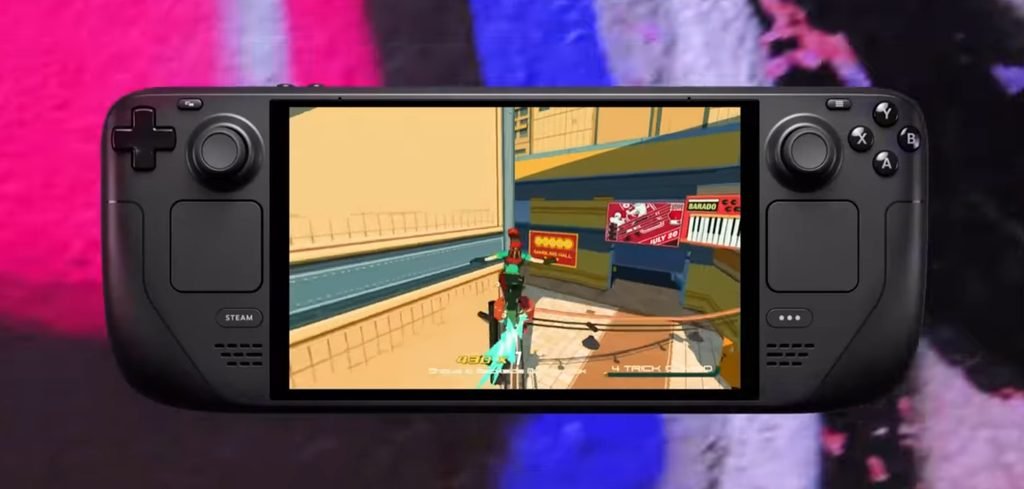
Valve’s Steam Deck OLED remains the benchmark for a console like PC handheld. Its custom AMD Zen 2/RDNA 2 APU is no longer the fastest in the category, but SteamOS, excellent controls and efficient hardware make the complete experience unusually cohesive.
Key specifications
- Processor: Custom 6nm AMD APU; 4core/8thread Zen 2 CPU and 8 RDNA 2 compute units
- Display: 7.4inch HDR OLED, 1280 × 800, up to 90Hz, 1,000nit peak HDR brightness
- Memory and storage: 16GB LPDDR5; 512GB or 1TB NVMe SSD; microSD expansion
- Connectivity: Wi Fi 6E and Bluetooth
- Battery: 50Wh; Valve rates the OLED model for 30 to 50% longer life than the LCD version
Key features, pros and cons
Features: Fast suspend and resume, game compatibility ratings, dual trackpads, gyro controls, four rear buttons and a highly readable HDR screen.
Pros: The easiest PC handheld to use; excellent ergonomics; superb OLED contrast; strong battery efficiency; mature community profiles and support.
Cons: Lower peak performance than newer premium rivals; some anti cheat and non Steam titles remain awkward or unsupported; 800p resolution is modest.
More info – https://www.steamdeck.com/en/oled
2. ROG Xbox Ally X : Popular Windows handheld
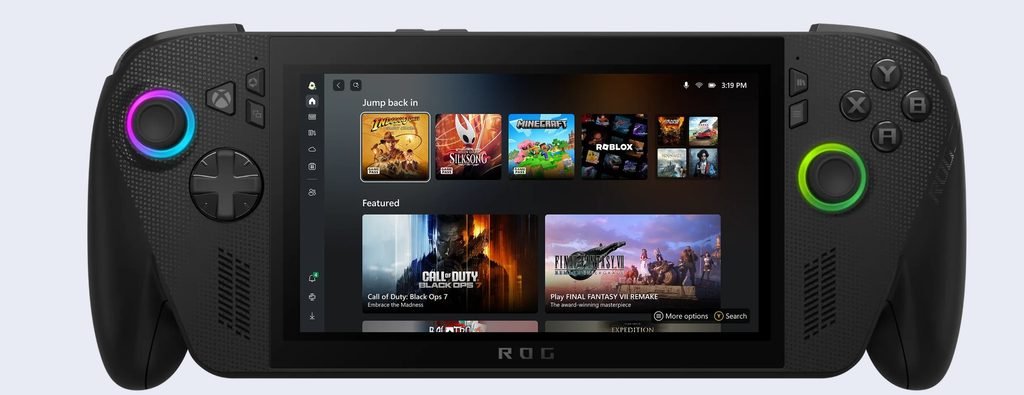
Created by ASUS in partnership with Xbox and AMD, the ROG Xbox Ally X combines a controller inspired chassis with Windows flexibility. It is the strongest option here for players who want Xbox Game Pass, multiple PC storefronts and demanding games on one portable machine.
Key specifications
- Processor: AMD Ryzen AI Z2 Extreme
- Display: 7inch 1920 × 1080 touchscreen with 120Hz variable refresh rate
- Memory and storage: 24GB RAM and 1TB SSD; microSD support and upgradeable SSD
- Operating system: Windows 11 with an Xbox full screen experience
- Battery: 80Wh
Key features, pros and cons
Features: Aggregated game library, Xbox Game Bar controls, Xbox Play Anywhere synchronisation, cloud and Remote Play support, and access to Windows launchers beyond Xbox.
Pros: Excellent performance; broad game compatibility; generous memory and storage; substantial battery; familiar controller style grips.
Cons: Premium price; Windows still requires more updates and settings management than SteamOS or a console; high performance play can produce heat and fan noise.
More Info – ROG XBOX Ally X (2025) | Gaming Handheld PCs|ROG Global
3. Nintendo Switch 2 : Exclusives and hybrid play
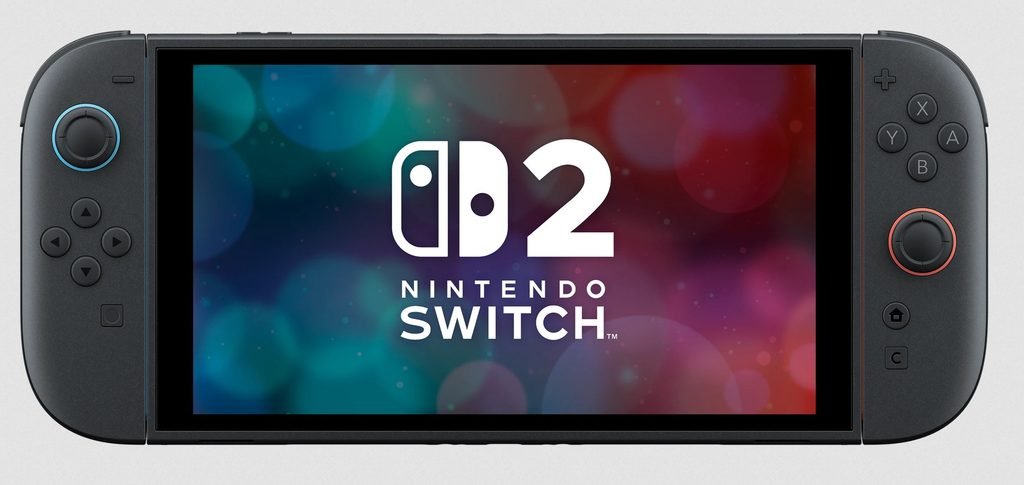
Nintendo Switch 2 is the simplest recommendation for players who prioritise Nintendo’s first party library, local multiplayer and effortless movement between handheld and television play. It offers a sharper, faster display than its predecessor while retaining detachable controllers and broad backward compatibility.
Key specifications
- Processor: Custom NVIDIA CPU/GPU
- Display: 7.9inch 1920 × 1080 wide colour LCD with HDR10 and VRR up to 120Hz
- Storage: 256GB UFS; microSD Express expansion up to 2TB
- Docked output: Up to 4K at 60fps, or up to 120fps at 1080p/1440p
- Battery: 5,220mAh; approximately 2 to 6.5 hours
- Weight: Approximately 534g with Joy Con 2 attached
Key features, pros and cons
Features: Detachable magnetic Joy Con 2 controllers, mouse style controller sensors, built in microphone, two USB C ports, physical game cards and a bundled dock.
Pros: Access to Nintendo exclusives; straightforward setup; strong local multiplayer; flexible handheld, tabletop and TV modes; lighter than most handheld PCs.
Cons: Shorter battery estimate than the original Switch OLED; LCD cannot match OLED black levels; microSD Express storage costs more than standard microSD; less open than a PC handheld.
More info – Nintendo Switch 2: Power Up Your Play – Nintendo US
4. Lenovo Legion Go S : Large screen SteamOS alternative
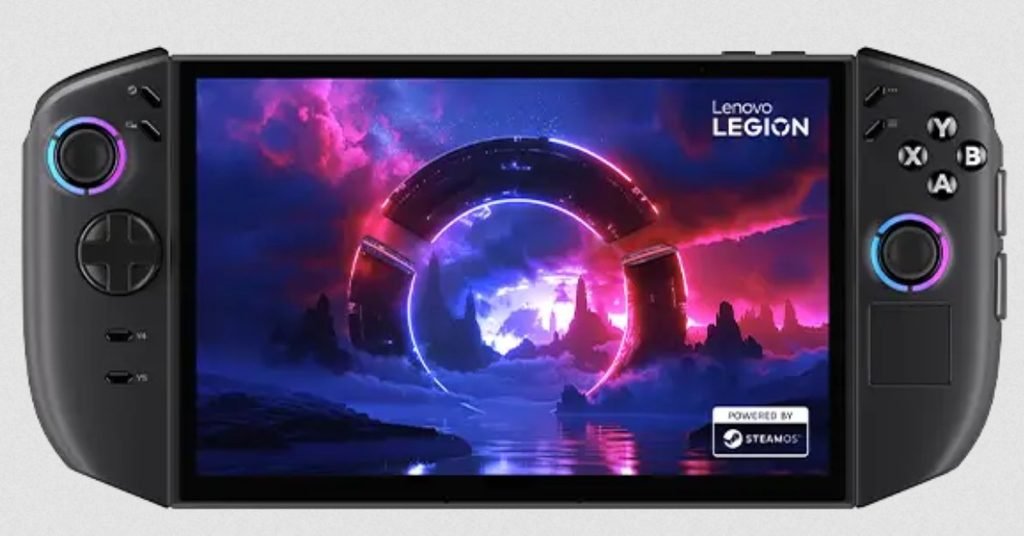
The Legion Go S offers a spacious 8inch screen in a fixed controller design. Configurations range from the efficient Ryzen Z2 Go to the faster Z1 Extreme, with either SteamOS or Windows available in selected models. The SteamOS edition is especially attractive to buyers who like the Steam Deck experience but want a larger, sharper display.
Key specifications
- Processor: AMD Ryzen Z2 Go or Ryzen Z1 Extreme, depending on configuration
- Display: 8inch 1920 × 1200 IPS touchscreen, 48 to 120Hz VRR, 500 nits, 100% sRGB
- Memory and storage: 16GB or 32GB LPDDR5X; 512GB or 1TB PCIe 4.0 SSD; microSD reader
- Battery: 55.5Wh with 65W USB C charging
- Connectivity: Wi Fi 6E, Bluetooth 5.3 and two USB4 ports
- Weight: Approximately 730 to 740g, depending on configuration
Key features, pros and cons
Features: Hall effect joysticks, adjustable trigger stops, a small touchpad, configurable power modes, dual USB4 ports and a choice of operating systems.
Pros: Large, sharp display; smooth VRR support; comfortable integrated controls; excellent port selection; SteamOS option reduces software friction.
Cons: Noticeably heavy; IPS contrast trails OLED rivals; model naming and configuration differences can make shopping confusing; Z2 Go versions are not class leading performers.
More info – Lenovo Legion Go S Gen 1 | Handheld Power Fueled by AMD Ryzen™ | Lenovo US
5. MSI Claw 8 AI+ : Intel powered handheld
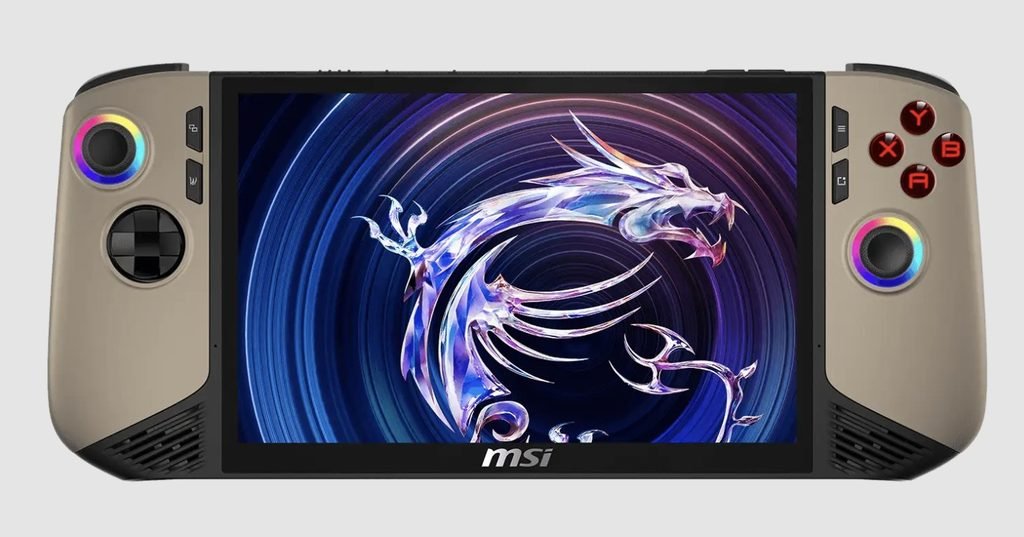
The MSI Claw 8 AI+ is a capable premium Windows handheld built around Intel’s efficient Core Ultra platform. Its large battery, modern wireless support and twin Thunderbolt 4 ports make it particularly versatile at a desk or on the road.
Key specifications
- Processor: Up to Intel Core Ultra 7 258V with Intel Arc 140V graphics
- Display: 8inch 1920 × 1200 touchscreen, 48 to 120Hz VRR
- Memory and storage: 32GB LPDDR5X; one M.2 2230 PCIe 4.0 SSD slot; microSD reader
- Battery: 80Wh
- Connectivity: Wi Fi 7, Bluetooth 5.4 and two Thunderbolt 4 ports
- Weight: Approximately 795g
Key features, pros and cons
Features: Hall effect sticks and triggers, fingerprint security, RGB controls, MSI Center M software, fast charging and external GPU support through Thunderbolt 4.
Pros: Excellent port selection; generous memory and battery; smooth variable refresh display; efficient Intel platform; strong mini PC potential.
Cons: One of the heaviest devices in this guide; Windows requires more maintenance than SteamOS; Intel game drivers can be less predictable than established AMD handheld platforms.
More Detail: MSI Claw 8 AI+ A2VM – Grip and Game
6. AYANEO 3 : Modular handheld
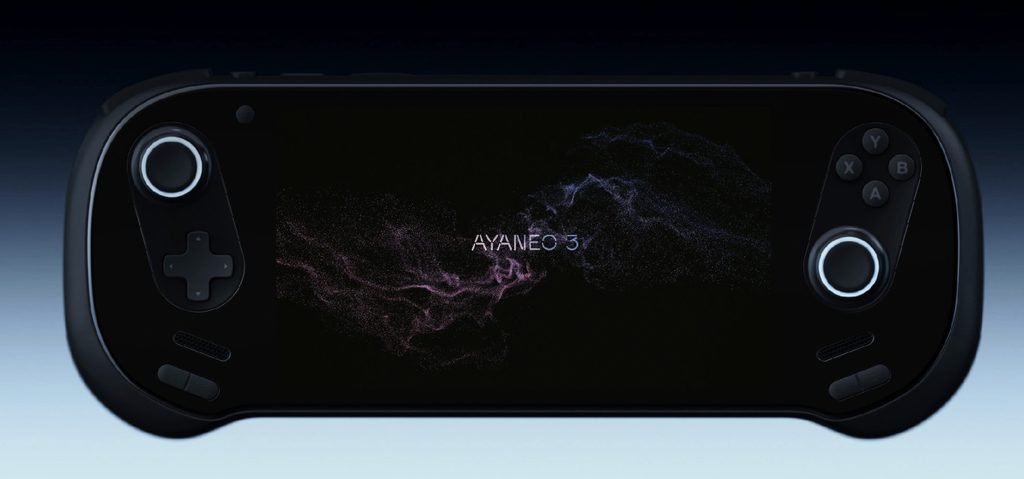
The AYANEO 3 is designed for enthusiasts who want to customise not just software settings but the physical controls. Its swappable Magic Modules can support conventional layouts, touchpad input or a six button fighting arrangement, while buyers can choose between fast LCD and OLED displays.
Key specifications
- Processor: AMD Ryzen 7 8840U or Ryzen AI 9 HX 370
- Display: 7inch 1920 × 1080 touchscreen; 120Hz IPS LCD or 144Hz HDR OLED
- Memory and storage: Up to 64GB LPDDR5X and up to 4TB PCIe 4.0 NVMe SSD
- Connectivity: Wi Fi 6E, Bluetooth 5.3, USB4 and OCuLink
- Operating system: Windows 11 with AYASpace 3.0
Key features, pros and cons
Features: Motor released interchangeable controller modules, swappable ABXY positions, Hall effect controls, multiple physical layouts and external GPU connectivity.
Pros: Unmatched control customisation; excellent OLED option; powerful processor choices; unusually generous memory and storage configurations.
Cons: High end configurations are expensive; optional modules add cost; Windows and AYASpace introduce additional complexity; availability and after sales support are less extensive than mainstream brands.
More Details: AYANEO 3 – AYANEO
7. GPD WIN 5 : Maximum performance
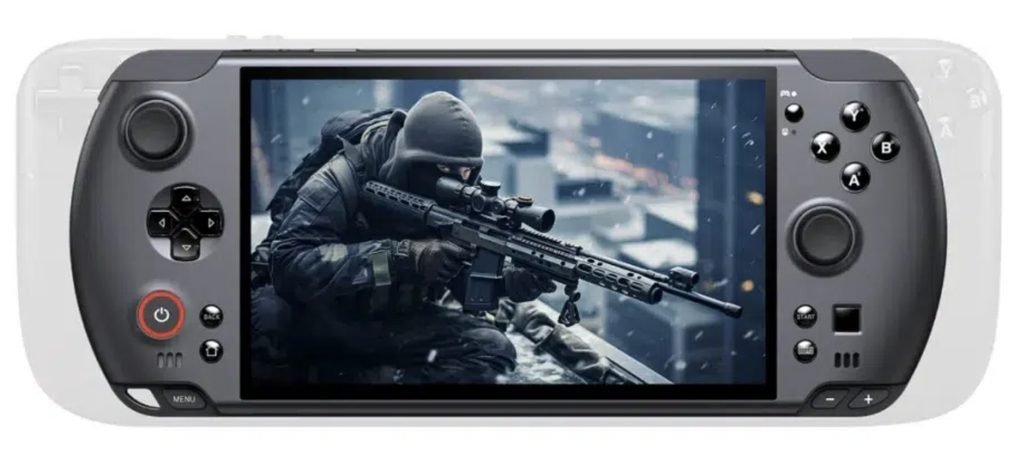
The GPD WIN 5 pushes the definition of a handheld PC closer to a compact workstation. Its AMD Ryzen AI Max platform combines a powerful Zen 5 CPU with unusually capable integrated Radeon graphics and large pools of unified memory, targeting buyers prepared to pay for peak portable performance.
Key specifications
- Processor: AMD Ryzen AI Max 385 or Ryzen AI Max+ 395 with Radeon 8050S or 8060S graphics
- Display: 7inch 1920 × 1080 LTPS panel, 120Hz with FreeSync Premium
- Memory and storage: 32GB, 64GB or 128GB LPDDR5X; 1TB, 2TB or 4TB M.2 2280 SSD; Mini SSD and microSD expansion
- Battery: Detachable external 80Wh pack with 180W charging
- Ports: USB4, USB C and USB A on the device, with further dock expansion
- Weight: Approximately 590g without the external battery, or 940g with it attached
Key features, pros and cons
Features: High power 45 to 75W operating range, detachable battery, capacitive joysticks, Hall effect triggers, fingerprint reader and extensive storage expansion.
Pros: Exceptional CPU and integrated GPU performance; vast memory options; fast full size SSD storage; replaceable battery; strong workstation potential.
Cons: Extremely expensive; heavy with the battery attached; high power draw and cooling demands; the external battery arrangement is less convenient than an integrated pack.
More info – GPD WIN 5 The Ultimate Handheld Gaming PC | GPD