Samsung’s Galaxy Z Fold8 is the mainstream foldable phone in the company’s eighth-generation Galaxy Z series. It is designed for people who move between quick interactions, deeper discovery, streaming, reading, gaming and content creation throughout the day. It sits alongside the Galaxy Z Fold8 Ultra and Galaxy Z Flip8, giving the 2026 foldable lineup three distinct experiences: Ultra productivity, everyday immersion and compact self-expression.
The easiest way to understand the Galaxy Z Fold8 is this: it is a foldable that feels more natural when closed, more immersive when open and more useful because Galaxy AI has been tuned for the foldable format. It is not only about having a bigger screen in your pocket; it is about moving from a compact phone experience to a tablet-like workspace or entertainment canvas without changing devices.
Design: A Lighter, Flatter Fold
The Galaxy Z Fold8 is described as “the world’s lightest fold” and introduces an all-new shape designed to feel more natural in everyday use. Its flatter fold, lightweight build, smooth unfolding, Flex Titanium and durability-focused construction all matter because foldables succeed or fail on how comfortable they feel in the hand, in a pocket and during repeated opening and closing.
The design is also tied closely to content habits. The Galaxy Z Fold8 is shaped for digital explorers who jump between social feeds, articles, videos, books and apps. In practice, that means the phone is built around two different experiences: a cover screen for quick, familiar use and a main screen for moments when users want more room.
Displays: Built Around Modern Content Ratios
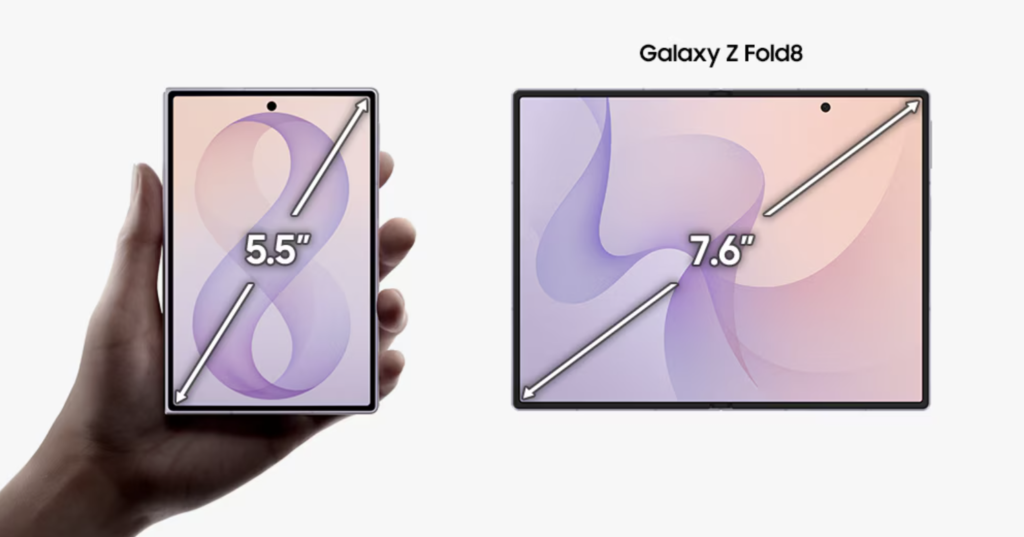
One of the Galaxy Z Fold8’s most useful changes is its display ratio setup. When folded, the cover screen uses a 10:16 aspect ratio that suits social media, messaging and quick browsing. When unfolded, the main screen uses a 4:3 aspect ratio, giving users a broader canvas for movies, e-books, articles and other longer-form experiences.
Both screens reach 3000 nits of brightness, while the main screen includes anti-reflection technology to reduce glare. That makes the device better suited to reading, watching and multitasking indoors, outdoors or on the go. For website readers comparing foldables, this combination of aspect ratios and brightness is one of the Galaxy Z Fold8’s most important everyday upgrades because it affects nearly every interaction with the phone.
Performance: Snapdragon Power Customised for Galaxy
The Galaxy Z Fold8 is powered by Snapdragon 8 Elite Gen 5 for Galaxy. The platform combines a next-generation CPU, GPU and NPU, supporting activities such as streaming, reading, gaming, AI-powered tools and smoother visuals. The “for Galaxy” branding points to a customised version of the chipset for flagship Galaxy devices.
For anyone considering whether a foldable can replace a conventional flagship phone, performance is critical. The Galaxy Z Fold8 is built not only for casual content consumption but also for heavier workflows that involve multitasking, AI features and rich media. The large foldable screen makes that performance more visible because users are more likely to run multiple windows, switch between apps or use the device for longer sessions.
Battery and Storage: Designed for Long Sessions
The Galaxy Z Fold8 has a 4800 mAh battery and supports up to 26 hours of streaming. That is a useful figure for readers because foldables have to power two displays and encourage longer viewing, reading and multitasking sessions. The battery is built into a compact design while still supporting immersive use throughout the day.
Storage options are also generous, with 256 GB, 512 GB and 1 TB configurations available. That gives users room for saved tabs, photo libraries, long tutorials, e-books, videos and apps. For buyers who expect to keep their foldable for several years, the larger storage options may be especially appealing.
Camera: Dual 50 MP for Everyday Moments
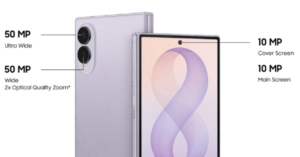
The Galaxy Z Fold8 features a Dual 50 MP rear camera system. The camera experience is built around convenience: users can capture moments while travelling, meeting friends or exploring new places without interrupting the experience. The foldable design also supports flexible shooting styles, including framing content after filming.
For web readers, the key takeaway is that the camera is part of the Fold8’s everyday lifestyle appeal rather than only a technical spec sheet feature. The device is meant to be both a phone camera and a larger-screen editing, viewing and sharing device, which is where the foldable form factor can add value after the shot is taken.
Galaxy AI: Optimised for Foldable Screens
Galaxy AI has been optimised for the new Galaxy Z series, with insights and actions designed to feel more connected across the lineup. On the Galaxy Z Fold8 and Galaxy Z Fold8 Ultra, the larger screens make multitasking easier. Partner AI experiences such as Gemini Intelligence are also part of the broader AI experience, with an emphasis on transparency, privacy and user control.
This is where the Fold8’s format becomes more than a novelty. AI tools can be more useful when there is room to view source material, summaries, chats, notes or creative output at the same time. AI and multitasking are central to the Fold8 experience, not optional extras.
Durability: Built on Seven Generations of Foldable Innovation
The new Galaxy Z series builds on seven generations of foldable innovation and consumer insight. The Galaxy Z Fold8 highlights Flex Titanium, smooth unfolding and durability-focused engineering. While durability has always been one of the biggest questions around foldable phones, the Fold8 reflects a more mature device category shaped by years of refinement.
That is important for mainstream buyers. Early foldables were often seen as experimental, but the Fold8 presents the category as a polished everyday option for regular content, productivity and entertainment habits. The durability-focused design is meant to reassure users that the foldable mechanism and display experience are central engineering priorities.
How the Galaxy Z Fold8 Fits in Samsung’s 2026 Lineup
The 2026 Galaxy Z lineup separates Samsung’s foldables into three experiences. Galaxy Z Fold8 Ultra is aimed at maximum productivity and content creation in a larger workspace. Galaxy Z Fold8 is aimed at immersive discovery and everyday content experiences. Galaxy Z Flip8 is positioned around self-expression and quick interaction on the go.
That makes the Galaxy Z Fold8 the balanced option in the family. It is for users who want the foldable advantage of a larger inner screen but may not need the Ultra model’s larger productivity-focused positioning. For many buyers, the Fold8’s combination of lighter design, bright displays, strong performance, AI features and flexible camera use may be the most approachable book-style foldable in the lineup.
Key Specifications
| Category | Specification |
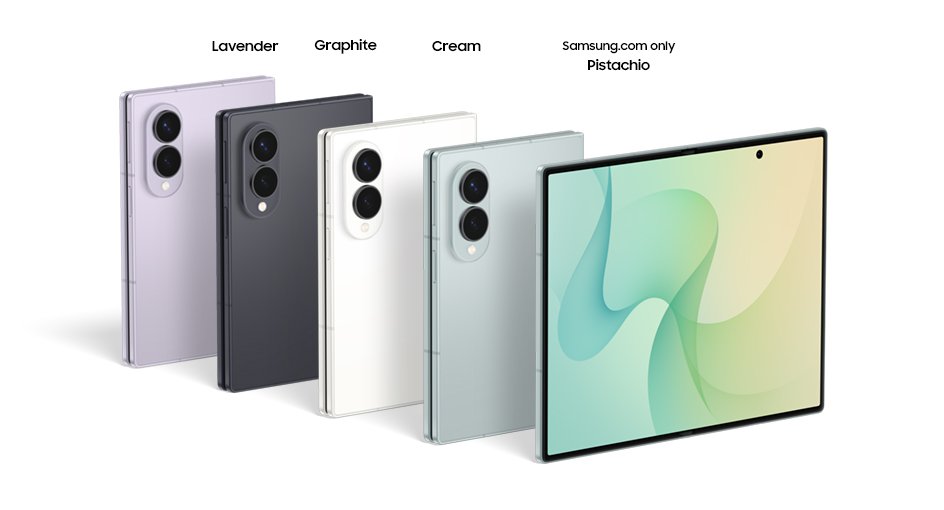
| Colours | Lavender, Graphite, Cream and Pistachio. Colour availability may vary by market or carrier; some colours may be exclusive to Samsung.com. |
| Processor | CPU speed: 4.74 GHz and 3.6 GHz. CPU type: Octa-Core. |
| Main display size | 193.2 mm (7.6 inches full rectangle) / 192.5 mm (7.6 inches rounded corners). |
| Main display resolution | 1848 x 2448 (QXGA+). |
| Main display technology | Dynamic AMOLED 2X. |
| Main display colour depth | 16M. |
| Main display refresh rate | 120 Hz maximum refresh rate. |
| Sub display size | 138.4 mm (5.5 inches full rectangle) / 137.5 mm (5.4 inches rounded corners). |
| Sub display resolution | 1972 x 1248 (WUXGA+). |
| Sub display technology | Dynamic AMOLED 2X. |
| Sub display colour depth | 16M. |
| Rear camera resolution | 50.0 MP + 50.0 MP. |
| Rear camera aperture | F1.8 and F1.9. |
| Rear camera auto focus | Yes. |
| Rear camera OIS | Yes. |
| Rear camera zoom | Optical quality zoom 2x, enabled by Adaptive Pixel sensor; digital zoom up to 10x. |
| Rear camera flash | Yes. |
| Front camera | 10.0 MP, F2.2, no auto focus. |
| Cover camera | 10.0 MP, F2.2, no auto focus. |
| Video recording | UHD 8K (7680 x 4320) at 30 fps. |
| Slow motion | 240 fps at FHD, 120 fps at FHD and 120 fps at UHD. |
| Memory and storage | 12 GB memory with 256 GB storage and 223.6 GB available storage listed for the 256 GB model. Samsung also lists 256 GB, 512 GB and 1 TB model options. |
| SIM size | Nano-SIM (4FF) and Embedded-SIM. |
| Network infrastructure | 2G GSM, 3G WCDMA, 4G LTE FDD, 4G LTE TDD, 5G Sub6 FDD and 5G TDD Sub6. |
| 2G GSM bands | GSM850, GSM900, DCS1800 and PCS1900. |
| 3G UMTS bands | B1 (2100), B2 (1900), B4 (AWS), B5 (850) and B8 (900). |
| 4G FDD LTE bands | B1 (2100), B2 (1900), B3 (1800), B4 (AWS), B5 (850), B7 (2600), B8 (900), B12 (700), B13 (700), B17 (700), B18 (800), B19 (800), B20 (800), B25 (1900), B26 (850), B28 (700) and B66 (AWS-3). |
| 4G TDD LTE bands | B38 (2600), B39 (1900), B40 (2300) and B41 (2500). |
| 5G FDD Sub6 bands | N1 (2100), N2 (1900), N3 (1800), N5 (850), N7 (2600), N8 (900), N12 (700), N20 (800), N25 (1900), N26 (850), N28 (700) and N66 (AWS-3). |
| 5G TDD Sub6 bands | N38 (2600), N40 (2300), N41 (2500), N77 (3700) and N78 (3500). |
| USB interface | USB Type-C. |
| USB version | USB 3.2 Gen 1. |
| Location technology | GPS, Glonass, Beidou, Galileo and QZSS. |
| Earjack | USB Type-C. |
| MHL | No. |
| Wi-Fi | 802.11a/b/g/n/ac/ax/be 2.4 GHz + 5 GHz + 6 GHz, EHT320, MIMO and 4096-QAM. |
| Wi-Fi Direct | Yes. |
| Bluetooth | Bluetooth v6.0. |
| NFC | Yes. |
| Ultra-Wideband | Yes. |
| Expandable memory | No expandable memory. |
| Battery | 4800 mAh battery capacity. |
| Operating system | Android 17. |
| Dimensions | Dimensions (HxWxD, mm) 123.9 x 161.4 x 4.5 (4.88 × 6.35 × 0.18 inches) Dimensions when folded (HxWxD, mm) 123.9 x 81.9 x 9.7 (123.9 × 81.9 × 9.7 mm) |
| Weight | 201 g |
Pricing and Global Availability
Galaxy Z Fold8 pricing varies by region, storage capacity, taxes, retailer offers and launch promotions. The table below gives a quick view of the main starting prices and storage-based options available across major markets.
- United States: From US$1,899 for 12 GB + 256 GB. Other listed options include US$2,099 for 12 GB + 512 GB and US$2,499 for 16 GB + 1 TB.
- United Kingdom: From £1,699 for the Galaxy Z Fold8. Pricing may vary by storage capacity, retailer and promotional offers.
- Europe: Listed European options include €1,999 for 12 GB + 256 GB, €2,199 for 12 GB + 512 GB and €2,599 for 16 GB + 1 TB.
- India: From ₹179,999 for the Galaxy Z Fold8. Final pricing may vary by configuration, retail channel and launch offers.
- Australia: From A$2,699 for 12 GB + 256 GB. Other listed options include A$2,999 for 12 GB + 512 GB and A$3,599 for 16 GB + 1 TB.
What’s in the Box?
The Galaxy Z Fold8 box keeps things simple. Buyers should expect the phone itself, a USB charging cable, a SIM ejector tool and basic documentation such as warranty or quick-start materials. A charging adapter is not included in the box, so anyone who does not already have a compatible charger will need to purchase one separately.
How It Differs from Previous Galaxy Fold Models
The Galaxy Z Fold8 is not simply a routine follow-up to the older Galaxy Z Fold formula. It represents a more lifestyle-focused branch of the Fold family, while the larger Galaxy Z Fold8 Ultra carries more of the traditional productivity-first Fold identity. That makes the Fold8 feel different from earlier Fold models in both shape and purpose.
- New form factor: Previous Galaxy Fold models focused on a larger productivity-style inner display, while the Fold8 uses a more compact, passport-like shape built around everyday discovery, reading, streaming and social content.
- Different screen proportions: The Fold8’s 10:16 folded screen and 4:3 unfolded display make it feel more natural for quick phone use and more balanced for books, videos, articles and apps.
- Lighter feel: At 201g, the Fold8 is positioned as a lighter alternative to larger Fold models, making it easier to carry and use for longer sessions.
- Camera setup changes: The Fold8 uses a Dual 50 MP rear camera system, while some previous Fold models included a telephoto camera as part of a triple-camera setup. The Fold8 focuses more on everyday wide and ultra-wide shooting.
- No S Pen support: Unlike some earlier Fold generations, the Fold8 does not support the S Pen, so users who want stylus-based productivity should consider this before upgrading.
- AI-first experience: Galaxy AI, Gemini Intelligence, Multi Window, App Continuity and Taskbar features are more central to the Fold8 experience, making the software feel more adapted to foldable use.
- Different buyer target: Earlier Galaxy Fold models were often marketed around productivity and replacing a small tablet. The Fold8 is better understood as an immersive everyday foldable for browsing, media, social content and flexible multitasking.
Pros and Cons
Pros
- Large 7.6-inch foldable main display gives users more room for reading, streaming, multitasking and editing.
- Bright 3000-nit screens and anti-reflection technology help improve visibility indoors and outdoors.
- Snapdragon 8 Elite Gen 5 for Galaxy provides strong performance for gaming, streaming, AI features and multitasking.
- Dual 50 MP rear camera system makes the phone more versatile for everyday photos and content creation.
- Up to 1 TB of storage gives heavy users more room for apps, videos, photos and offline content.
Cons
- Charging adapter is not included in the box, which adds an extra purchase for some buyers.
- No expandable memory, so buyers need to choose the right storage option upfront.
- Foldable phones are still more expensive than many traditional flagship smartphones.
- The larger foldable form factor may not suit users who prefer compact, lightweight phones.
- Some features, colours or storage options may vary by market, carrier or retailer.
Verdict: Who Is the Galaxy Z Fold8 For?
The Samsung Galaxy Z Fold8 is for users who want a phone that can shift from quick one-handed interactions to a broader, more immersive screen experience. Its biggest strengths are the lighter foldable design, content-friendly screen ratios, 3000-nit brightness, Snapdragon 8 Elite Gen 5 for Galaxy performance, 4800 mAh battery, up to 1 TB of storage, Dual 50 MP camera system and foldable-optimised Galaxy AI.
The Fold8 story is not simply about making a foldable phone; it is about making the foldable feel more normal, more useful and more connected to the way people browse, watch, read, create and multitask. For website readers exploring the latest foldables, the Galaxy Z Fold8 is best understood as the everyday immersive model: powerful, flexible and built to make the large-screen foldable experience easier to use more often.